



What's Happening?
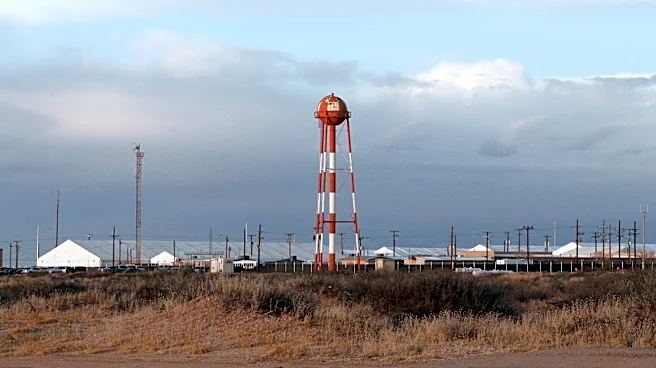
A recent inspection at Camp East Montana, the largest immigration detention facility in the U.S., revealed numerous violations of national detention standards. Conducted by Immigration and Customs Enforcement’s (ICE) Office of Detention Oversight, the inspection identified
49 deficiencies, including issues related to the use of force, medical care, and security. The facility, which opened in August 2025, has been under scrutiny following the deaths of three detainees. The inspection report highlighted failures in documenting checks to prevent self-harm and suicide, inadequate medical care, and security lapses. The facility was initially managed by Acquisition Logistics, a company with no prior experience in running detention centers, but has since been taken over by Amentum Services.
Why It's Important?
The findings at Camp East Montana underscore significant concerns about the treatment and safety of detainees in U.S. immigration facilities. The violations could potentially expose detainees to harm, including excessive force and inadequate medical care. This situation raises questions about the oversight and accountability of private contractors managing such facilities. The issues at Camp East Montana reflect broader challenges within the U.S. immigration detention system, impacting thousands of detainees and drawing criticism from lawmakers and human rights advocates. The facility's management and operational failures could lead to increased calls for reform and stricter regulations governing detention centers.
What's Next?
With the transition to a new contractor, Amentum Services, there is potential for improvements in the management and conditions at Camp East Montana. ICE has indicated that the new contract will enhance medical care and increase staff presence. However, ongoing scrutiny from lawmakers and advocacy groups is likely, as they push for accountability and better conditions for detainees. The Department of Homeland Security's decision to pause the purchase of additional facilities may also influence future policy decisions regarding the expansion and management of detention centers.