






What's Happening?
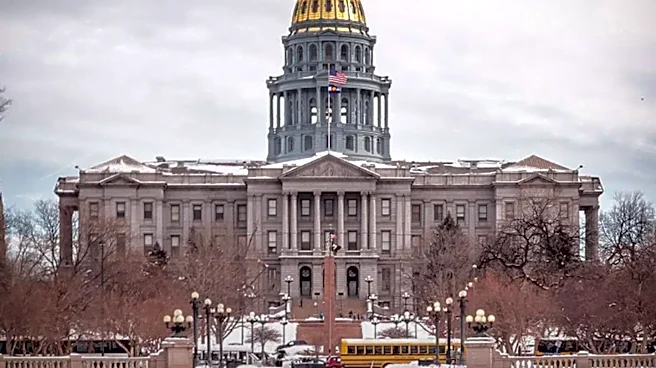
A new law in Colorado, Senate Bill 011, mandates that social media platforms respond to search warrants within 72 hours, effective August 12. This legislation, signed by Governor Jared Polis, is designed to assist law enforcement in quickly investigating
activities that threaten public safety. The bill also requires platforms to establish a hotline for law enforcement agencies. This measure is a streamlined version of a previous bill that was vetoed due to concerns about data collection and enforcement of state laws by social media companies. The law has garnered support from various groups, including law enforcement, healthcare providers, and youth advocates, who argue that it could prevent crimes facilitated through social media. The bill is seen as a critical tool in addressing issues such as drug trafficking and gun violence, as highlighted by past incidents where delayed responses from social media companies hindered investigations.
Why It's Important?
The implementation of this law is significant as it addresses the growing concern over crimes committed via social media platforms. By reducing the response time for search warrants, the law aims to enhance the ability of law enforcement to act swiftly in preventing potential threats and crimes. This is particularly crucial in cases involving drug trafficking and gun violence, where timely intervention can save lives. The law also reflects a broader trend of states attempting to regulate online activities to protect public safety, especially for minors. However, it raises questions about privacy and the balance between state enforcement and individual rights. The law's success could influence similar legislative efforts in other states, potentially reshaping how social media companies interact with law enforcement.
What's Next?
As the law takes effect, social media companies will need to adjust their processes to comply with the new requirements. This may involve setting up dedicated teams to handle law enforcement requests promptly. The effectiveness of the law will likely be monitored closely by both supporters and critics, with potential legal challenges on privacy grounds. Law enforcement agencies may also need to adapt their strategies to leverage the new tools provided by the law. The outcomes of this legislation could lead to further discussions and potential amendments to address any unforeseen challenges or loopholes.