

What's Happening?
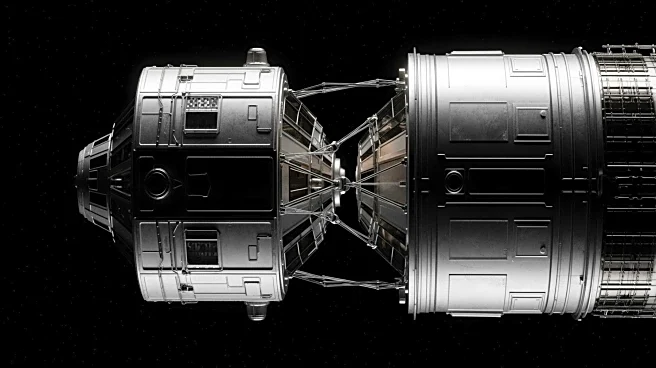
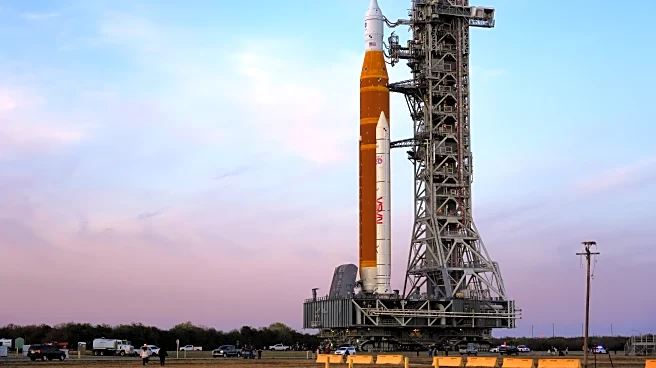
NASA has successfully conducted a planetary defense test aimed at determining whether humanity can protect Earth from potential cosmic threats. The test involved a spacecraft that was launched to alter the orbits of several asteroids. This experiment
was part of a broader initiative to develop strategies for deflecting asteroids that could pose a danger to Earth. The success of this mission marks a significant milestone in planetary defense, showcasing the ability to change the trajectory of celestial bodies through human intervention.
Why It's Important?
The successful alteration of asteroid orbits by NASA's spacecraft is a crucial development in planetary defense. This capability is vital for safeguarding Earth from potential asteroid impacts, which could have catastrophic consequences. The ability to redirect asteroids enhances global security and demonstrates technological advancements in space exploration and defense. This success also underscores the importance of continued investment in space research and technology, as it provides a practical solution to a potential existential threat. Stakeholders in the space industry, governments, and scientific communities stand to benefit from these advancements, as they contribute to the safety and sustainability of life on Earth.
What's Next?
Following the success of this test, NASA and other space agencies may continue to refine and develop more sophisticated methods for asteroid deflection. Future missions could involve larger-scale tests or the development of more advanced technologies to enhance the precision and effectiveness of such interventions. Additionally, international collaboration may be sought to establish a comprehensive planetary defense strategy, involving shared resources and expertise. The success of this mission could also lead to increased funding and support for space exploration initiatives, as the practical benefits of such technologies become more apparent.