






What's Happening?
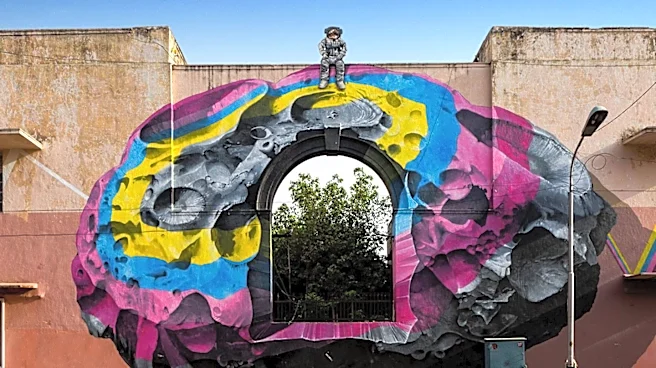
Urban artists in El Salvador are transforming walls once marked by gang territory into colorful murals as part of the traveling Pigmen Trip festival. This artistic reclamation is occurring in the wake of President Nayib Bukele's security campaign, launched
in 2022, which has significantly diminished the power of gangs. Isaac Sosa, 31, founder of the festival, noted that painting murals in gang-controlled areas was previously a frightening endeavor due to harassment and threats. Now, artists like Darwin Flores, 36, can enter neighborhoods once considered dangerous without fear. The festival, which has been running for eight years, has produced over 200 murals with artists from El Salvador and other Latin American countries. While the security crackdown has been effective in reducing gang influence, it has also faced allegations of human rights abuses from non-governmental organizations.
Why It's Important?
The ability of artists to freely create murals in formerly gang-controlled areas signifies a profound shift in public safety and social dynamics in El Salvador. This transformation suggests a return of public spaces to civilian life, fostering a sense of community and cultural expression that was previously suppressed by gang violence. For the U.S., this development in a Central American nation has implications for regional stability and migration patterns. A more secure El Salvador could potentially reduce the number of individuals seeking refuge or economic opportunities in the U.S. due to violence. However, the allegations of human rights abuses associated with President Bukele's security campaign present a complex challenge for U.S. foreign policy, balancing security gains with democratic values and human rights concerns. The U.S. has a vested interest in promoting stability and human rights in the region, and this situation highlights the ongoing tension between these objectives.
What's Next?
The continuation of artistic and cultural activities in previously dangerous areas will likely further solidify the social changes brought about by the security campaign. As artists continue to reclaim public spaces, it could lead to increased community engagement and a stronger sense of civic pride. However, the long-term sustainability of these changes will depend on addressing the underlying social and economic factors that contribute to gang recruitment. The international community, including the U.S., will continue to monitor the human rights situation in El Salvador, particularly as the security campaign progresses. Future U.S. policy towards El Salvador may involve a delicate balance of supporting security initiatives while advocating for due process and human rights protections. The success of this model in El Salvador could also influence security strategies in other Central American nations grappling with similar gang issues.
Beyond the Headlines
The reclaiming of public walls through art in El Salvador represents more than just a reduction in crime; it symbolizes a psychological and cultural liberation for communities. Art, in this context, becomes a powerful tool for social transformation, allowing residents to express themselves and rebuild their collective identity in spaces once dominated by fear and violence. This phenomenon highlights the deep connection between security, public space, and cultural expression. The shift from gang graffiti to vibrant murals reflects a broader societal healing process, where art serves as a visible marker of progress and hope. However, the ethical implications of achieving this security through methods that draw human rights concerns remain a critical underlying issue, prompting a deeper examination of the trade-offs between order and liberty in post-conflict or high-crime environments.