


What's Happening?
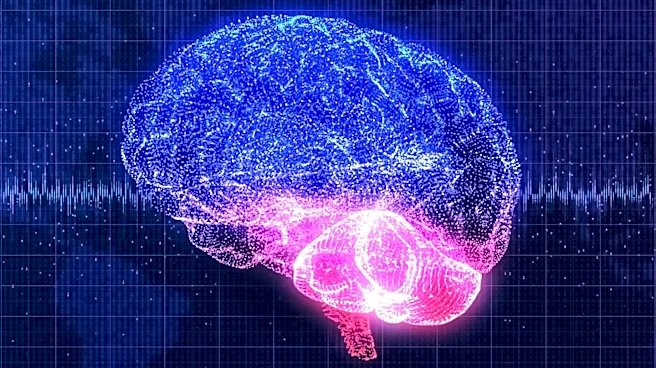
Recent advancements in neuroscience have led to the creation of part-human, part-mouse brains. Researchers have genetically engineered mice to lack their own cerebral cortex and subsequently implanted human brain cells into these mice. This innovative
approach aims to provide a more accurate model for studying human-specific psychiatric and neurodevelopmental diseases, which are difficult to research using traditional animal models or lab-grown organoids alone. The human cells are integrated into the mouse brain, forming connections and developing in a more natural environment than a petri dish. This method allows scientists to observe how human neurons function and interact within a living system, offering new insights into complex brain conditions.
Why It's Important?
This development is significant for U.S. medical research and public health. It offers a powerful new tool for understanding and potentially treating a range of human brain diseases, such as cerebral palsy, Alzheimer's, and other neurodevelopmental disorders. The ability to study human brain cells in a living, integrated system could accelerate drug discovery and therapeutic development, as current animal models often fail to accurately predict drug efficacy in humans. However, the creation of these 'chimeric' brains also raises profound ethical questions regarding the treatment of these genetically modified animals. Bioethicists are grappling with whether these animals should be afforded different rights or considerations due to the presence of human brain cells, particularly as the technology advances and the human cells become more integrated and functional.
What's Next?
The researchers involved in this study have emphasized that their work was conducted with strong ethical oversight, including review by independent bioethics panels. They deliberately limited the experiments, for instance, by stopping them before the human brain cells reached a developmental stage associated with consciousness. However, as the technology progresses, the ethical considerations are expected to become more complex. Future research may explore similar procedures in larger, longer-living animals like pigs or non-human primates, which could lead to more functionally meaningful circuits and amplify ethical concerns. Society will need to weigh in on the establishment of clear ethical guidelines and norms for such advanced research, particularly concerning the potential for consciousness or enhanced cognitive abilities in these chimeric animals.
Beyond the Headlines
The creation of part-human, part-mouse brains delves into the deeper philosophical and ethical implications of defining 'humanity' and consciousness. It challenges existing frameworks for animal welfare and research ethics, pushing the boundaries of what is considered acceptable in scientific pursuit. The presence of human neurons in an animal brain, even if not leading to human-like consciousness, blurs the lines between species and raises questions about the moral status of such beings. This research could also influence public perception of scientific advancements, potentially leading to debates about the responsible use of genetic engineering and stem cell technologies. The long-term societal impact could include a re-evaluation of our relationship with other species and the ethical limits of scientific exploration, particularly in areas that touch upon the fundamental nature of intelligence and self-awareness.