




What's Happening?
The Trump administration, through the Department of Health and Human Services (HHS), has issued a notice in the Federal Register requesting public comments on the current categories for vaccine recommendations. These categories currently include routine,
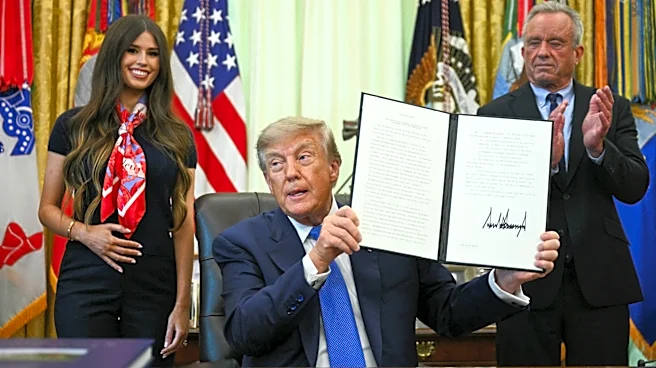
risk-based, and shared clinical decision-making. The administration is seeking feedback on whether the existing category structure adequately supports scientific rigor, informed choice, and public trust, and if additional or different categories should be adopted. This move follows an executive order signed by President Trump earlier this month, directing federal agencies to review vaccine recommendations. Experts note that while public input is generally appropriate, the initiation of this process by HHS, rather than the Centers for Disease Control and Prevention (CDC) or its advisory committee on immunization practices (ACIP), is unusual and raises concerns about the involvement of relevant expertise. The public has 30 days to submit comments.
Why It's Important?
This initiative by the Trump administration could significantly impact public health policy and vaccine accessibility in the United States. Shifting the process of evaluating vaccine recommendations from expert bodies like the CDC and ACIP to a public comment-driven approach, especially one initiated by HHS under the influence of vaccine opponents, could lead to increased confusion and potentially limit vaccine access. The current categories are designed by scientific experts to ensure public health and safety. Altering these categories without robust scientific consensus could undermine public trust in vaccine recommendations and create inconsistencies in healthcare guidance. This could have far-reaching consequences for disease prevention efforts and the overall health infrastructure, potentially leading to a decline in vaccination rates and a resurgence of preventable diseases. The involvement of individuals with a history of vaccine opposition in this process further amplifies concerns about the scientific integrity of future recommendations.
What's Next?
The public has a 30-day window to submit comments on the proposed review of vaccine recommendation categories. Following this period, the Department of Health and Human Services (HHS) and the Task Force will consider the input received. The outcome of this review could lead to the adoption of new or modified vaccine recommendation categories. This process is expected to draw significant attention from public health organizations, medical professionals, and advocacy groups, who will likely scrutinize any proposed changes. The short timeline for public comment suggests a rapid progression of this initiative. Potential reactions from stakeholders could include legal challenges if the changes are perceived to compromise public health standards or bypass established scientific protocols. The administration's next steps will likely involve synthesizing the public feedback and formulating a revised framework for vaccine recommendations, which could then be implemented or face further review.
Beyond the Headlines
The Trump administration's move to solicit public comment on vaccine recommendation categories, particularly its origin within HHS rather than the CDC or ACIP, highlights a deeper tension between political influence and scientific authority in public health. This initiative could set a precedent for how scientific recommendations are formulated and communicated to the public, potentially eroding the traditional role of expert-led bodies in favor of broader, less specialized input. The emphasis on 'informed choice' and 'public trust' in the notice, while seemingly benign, could be interpreted as an attempt to legitimize skepticism towards established vaccine science. This shift could have long-term implications for how the U.S. addresses future public health crises, potentially making it more challenging to implement evidence-based interventions. It also raises ethical questions about the balance between individual autonomy and collective public health, and the appropriate role of government in guiding health decisions based on scientific consensus.