





What's Happening?
The City of Nampa, Idaho, has been awarded a federal grant of nearly $43 million to construct an overpass at the Robinson Road rail crossing. This funding, totaling $42.98 million, marks the largest transportation grant in Nampa's history. The project
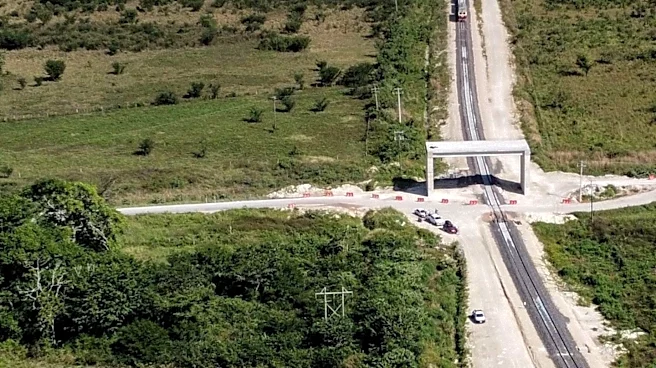
aims to build a new overpass that will carry traffic over the Union Pacific Railroad and Greenhurst Road, effectively eliminating a significant chokepoint that has caused congestion and safety concerns for drivers and emergency responders. The existing at-grade crossing is problematic due to its proximity to the railroad tracks, leading to delays and safety conflicts. City officials, including Nampa Director of Transportation Crystal Craig and Mayor Darl Bruner, emphasized the critical need for this infrastructure improvement to enhance connectivity, safety, and traffic flow within the city. The project is expected to commence in early 2030 and take up to three years to complete, with public input currently being sought for the design phase.
Why It's Important?
This substantial federal grant is crucial for Nampa's infrastructure development and public safety. The Robinson Road rail crossing has long been identified as a major impediment to efficient transportation and emergency services, with trains frequently blocking traffic and forcing first responders to seek alternative routes. The new grade-separated overpass will significantly improve safety by eliminating direct interactions between vehicles and trains, thereby reducing the risk of accidents. Furthermore, it will enhance traffic flow, alleviating congestion that is projected to worsen as the city grows; traffic on Robinson Road is expected to triple by 2050. This project also highlights a broader national trend where cities are competing for federal funds to address dangerous rail crossings, as evidenced by a similar $66.4 million grant awarded to Blaine, Washington, for its Bell Road rail crossing. The successful acquisition of this grant underscores Nampa's proactive approach to securing federal resources for critical local needs.
What's Next?
The immediate next steps for the Robinson Road overpass project involve finalizing the design, with public feedback currently being solicited by Nampa and the Nampa Highway District No. 1. This public input phase is crucial for ensuring the proposed improvements meet community needs and expectations. Following design finalization, the project is slated to begin construction in early 2030, with an estimated completion time of up to three years. The city will also need to clarify how a previously awarded smaller federal grant of $1.2 million for the same project integrates with this new, much larger funding allocation. As construction progresses, residents can anticipate significant traffic pattern changes in the area, though these will ultimately lead to long-term improvements in safety and efficiency. The successful execution of this project could also serve as a model for other U.S. cities facing similar rail crossing challenges.
Beyond the Headlines
The Nampa rail overpass project reflects a broader national imperative to modernize aging infrastructure and enhance transportation safety. Beyond the immediate benefits of reduced congestion and improved safety, this project signifies a strategic investment in Nampa's future economic vitality. Efficient transportation networks are vital for local businesses, facilitating the movement of goods and services and attracting new investments. The elimination of a major traffic bottleneck can also improve the quality of life for residents by reducing commute times and stress. Ethically, the project addresses a long-standing public safety concern, demonstrating a commitment to protecting citizens from potential hazards at rail crossings. This federal investment also underscores the ongoing role of national funding programs in supporting local infrastructure development, highlighting the interconnectedness of federal policy and local community well-being. The project's success could influence future federal funding priorities for similar infrastructure challenges across the country.