




What's Happening?
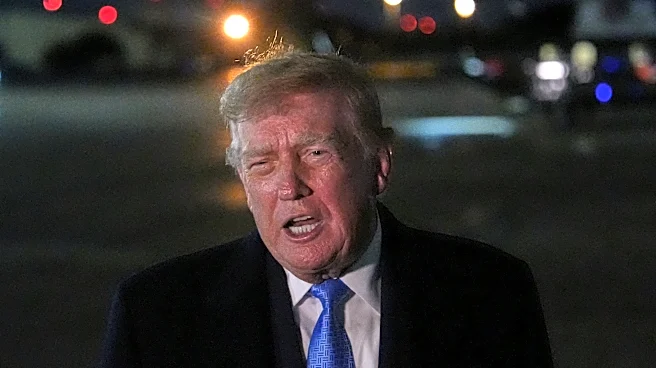
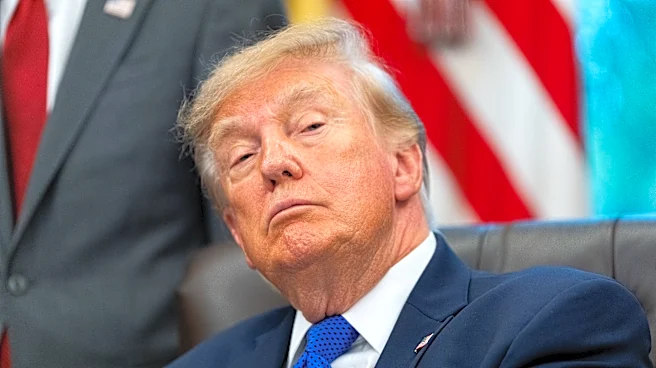
President Trump signed Executive Order 14399 earlier this year, directing the Department of Homeland Security (DHS) and the Social Security Administration to create a nationwide list of eligible voters. The order stipulates that the United States Postal
Service (USPS) would be prohibited from delivering mail-in ballots to individuals not on this list. Furthermore, the executive order mandates specific design changes for federal ballot envelopes, requiring them to bear an official Election Mail logo, a unique IMb and ballot mail STID, and be compatible with automated mail processing, having undergone USPS design review. Envelopes failing to meet these new requirements would not be delivered to voters. The order also threatens to withhold federal funding from states that do not comply with its provisions. This executive action comes weeks before the 2026 Midterm Elections, raising questions about its legality and potential impact on the voting process. A group of 24 states and the District of Columbia has filed a lawsuit to prevent the USPS from implementing the order, arguing it infringes upon the constitutional right of states to manage their own elections. The Supreme Court has reportedly blocked the USPS from implementing the executive order, following multiple lower-court injunctions and an earlier Supreme Court opinion that deemed a challenge premature due to a lack of action taken.
Why It's Important?
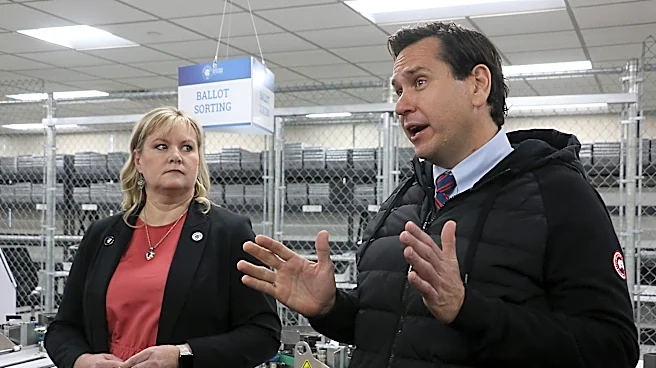
This executive order and the subsequent legal challenges highlight a significant federal-state conflict over election administration, particularly concerning mail-in voting. The ability of states to independently run their elections, a constitutional right, is at the core of the lawsuit filed by 24 states and the District of Columbia. Mail-in voting has become a critical method for many demographics, including the elderly, disabled individuals, out-of-state college students, and service members abroad, as indicated by a study from States United. Restricting this process could disenfranchise these groups and impact overall voter participation. Concerns about the security of mail-in ballots, while acknowledged, are often countered by election integrity measures such as special seals, ballot tracking, and secure storage. The debate also touches upon the broader issue of voter fraud, with studies suggesting that confirmed cases in mail-in voting are rare. The outcome of these legal battles will set precedents for federal intervention in state election processes and could significantly influence future election logistics and voter access across the U.S.
What's Next?
With the Supreme Court reportedly blocking the implementation of President Trump's executive order, the immediate threat of the USPS being unable to deliver non-compliant ballots appears to be averted for the upcoming 2026 Midterm Elections. However, the underlying legal and political debates surrounding federal oversight versus state autonomy in election administration are likely to continue. The lawsuit filed by 24 states and the District of Columbia will proceed, potentially leading to further judicial rulings that could clarify the boundaries of federal authority in election matters. Stakeholders, including voting rights groups and state election officials, will closely monitor any new attempts to impose federal restrictions on mail-in voting. The ongoing discussion about election integrity and voter access will remain a prominent feature of the political landscape, with potential legislative efforts at both federal and state levels to either codify or challenge existing mail-in voting practices. The focus will now shift to ensuring that all eligible voters can cast their ballots without undue federal interference, as the election season progresses.
Beyond the Headlines
The controversy surrounding President Trump's executive order on mail-in voting extends beyond immediate election logistics, touching upon fundamental questions of democratic governance and trust in institutions. The order's emphasis on a nationwide list of eligible voters and specific ballot envelope designs reflects a broader effort to address perceived vulnerabilities in the election system, particularly concerning voter fraud. However, critics argue that such measures, if not carefully implemented, could inadvertently create barriers to voting and disproportionately affect certain populations. The legal challenges underscore the delicate balance between federal efforts to ensure election integrity and the constitutional principle of states' rights in managing their own elections. This debate also highlights the increasing politicization of election administration, where procedural changes can be viewed through a partisan lens. The long-term implications could include a re-evaluation of federal-state partnerships in election oversight, potentially leading to more standardized national guidelines or, conversely, a stronger assertion of state sovereignty. The public's confidence in the electoral process, already a subject of intense scrutiny, will be significantly influenced by how these issues are resolved, shaping the future of democratic participation in the U.S.