




What's Happening?
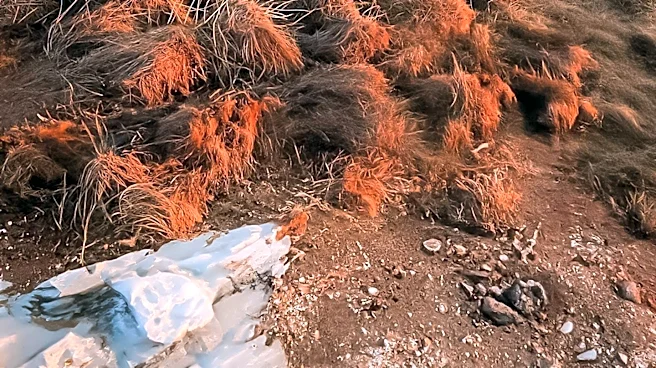
Arctic emissions of biogenic volatile organic compounds (BVOCs) are anticipated to rise significantly due to increasing temperatures. This surge in emissions, particularly from temperature-sensitive Arctic sedges, is expected to outpace the region's natural
ability to absorb carbon. Historically, forests, including those in the Arctic, have been viewed as crucial carbon sinks, mitigating climate change by absorbing carbon dioxide. However, this perspective is being revised as research highlights the dynamic and complex role of BVOCs. These reactive gases, accounting for approximately 90% of global non-methane volatile organic compounds, can influence cloud formation, contribute to air pollution, and extend the atmospheric lifetime of methane, a potent greenhouse gas. A projected 2°C–3°C rise in mean global temperature could increase total BVOC emissions worldwide by 30%–45%, with high-latitude, nutrient-limited ecosystems like the Arctic being particularly vulnerable to disproportionately large increases.
Why It's Important?
The projected increase in Arctic BVOC emissions carries significant implications for global climate regulation and air quality. If these emissions exceed the Arctic's capacity as a carbon sink, it could accelerate global warming by reducing the planet's natural ability to sequester carbon. The enhanced release of BVOCs, especially in the presence of pollutants like nitrogen oxides, can lead to the formation of ground-level ozone and secondary organic aerosols (SOAs), both of which are harmful air pollutants. These pollutants exacerbate respiratory health conditions, contribute to increased hospital emergency room visits, and are linked to higher mortality rates. The Arctic's role as a climate regulator is critical, and any shift from a net carbon sink to a net emitter of warming gases could have cascading effects on global weather patterns and sea levels, impacting coastal communities and ecosystems worldwide. This development challenges the traditional understanding of forests solely as climate change mitigators, emphasizing the need for a more nuanced approach to environmental policy and climate modeling.
What's Next?
Further research and improved atmospheric modeling are crucial to accurately predict the long-term impacts of increased Arctic BVOC emissions. Scientists are working to refine models like MEGAN (Model of Emissions of Gases and Aerosols from Nature) to better account for the diversity and responsiveness of real ecosystems, rather than relying on simplified representations. The integration of satellite observations, such as those from TROPOMI and NASA’s Orbiting Carbon Observatories, will provide more precise data on BVOC emissions and their atmospheric chemistry. This enhanced understanding will inform policymakers on the need for targeted strategies to mitigate the effects of warming in the Arctic, potentially including measures to reduce other greenhouse gas emissions that interact with BVOCs. The findings also highlight the importance of considering the chemical implications of urban greening initiatives, as species selection can influence local atmospheric composition and air quality.
Beyond the Headlines
The evolving understanding of BVOCs reveals a deeper complexity in the relationship between ecosystems and climate. The traditional view of forests as passive carbon sinks is being replaced by a recognition of their dynamic chemical interactions with the atmosphere. This shift has profound ethical and policy implications, as it suggests that simply planting trees may not always yield the desired climate benefits, especially if the chosen species or environmental conditions lead to increased BVOC emissions that contribute to warming or air pollution. It underscores the need for a holistic approach to environmental management that considers not only carbon sequestration but also atmospheric chemistry and its impact on human health. The challenge lies in balancing the benefits of natural ecosystems with their potential contributions to atmospheric warming and pollution, requiring interdisciplinary collaboration and innovative solutions to navigate this intricate environmental paradox.