






What's Happening?
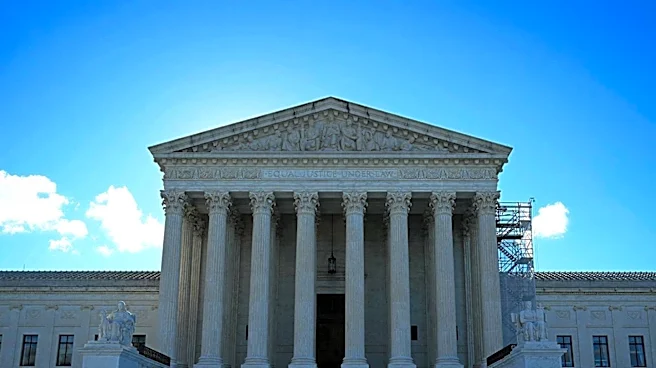
The Rhode Island Supreme Court recently struck down a state law that granted a special exemption for Estiatorio Fili, a Greek restaurant in Providence, to obtain a liquor license. This ruling jeopardizes the restaurant's ability to serve alcohol, with
owner George Potsidis planning to adapt his menu for a potential indefinite dry period starting in September. The 2023 law, passed by the General Assembly, allowed the Providence Board of Licenses to bypass a state regulation that restricts liquor licenses when a majority of neighboring property owners object. The court found that the General Assembly's action, which specifically targeted the restaurant's address, violated the Home Rule Amendment of the Rhode Island Constitution. This amendment dictates that laws affecting municipal 'property, affairs, and government' must either apply statewide or be approved by local voters. The court determined that the exemption did neither, raising questions about the validity of similar exemptions previously granted by the legislature.
Why It's Important?
This Supreme Court decision has significant implications for legislative practices in Rhode Island and potentially for businesses operating under similar special exemptions. The ruling challenges the General Assembly's long-standing practice of enacting narrow, property-specific laws to circumvent local regulations, particularly concerning liquor licenses. Attorney Jeffrey Padwa, representing Estiatorio Fili, suggests that the ruling could place up to 75 other existing liquor licenses, granted under similar exemptions, 'under a constitutional cloud.' This creates legal uncertainty for numerous establishments and could lead to a wave of challenges or force municipalities to find new ways to preserve these licenses. The decision underscores the importance of the Home Rule Amendment, reinforcing the principle that the General Assembly's authority, while broad, is not unlimited when it comes to local governance. It also highlights the tension between state legislative power and local autonomy, potentially shifting how future business and zoning regulations are approached in the state.
What's Next?
Estiatorio Fili's owner, George Potsidis, is exploring legal options following the ruling, while preparing to operate without a liquor license. The Providence Board of Licenses awaits a Superior Court order to implement the Supreme Court's decision, with no clear timeline provided. Attorneys for both the House and Senate are reviewing the implications of the ruling for future legislative actions and existing exemptions. The decision may prompt the General Assembly to reconsider its approach to special legislation, potentially leading to a shift towards statewide laws or requiring voter approval for municipality-specific changes. This could mean a more standardized regulatory environment or increased local referendums for certain business operations. The legal community anticipates that the ruling could open the door for challenges against other businesses that obtained licenses through similar legislative exemptions, creating a period of uncertainty for many establishments across Rhode Island.
Beyond the Headlines
The ruling delves into the deeper constitutional balance between state legislative power and local self-governance, as enshrined in Rhode Island's Home Rule Amendment. The practice of granting specific exemptions, often for individual businesses, has been a routine but now legally questionable aspect of the General Assembly's work. This case brings to light the potential for such exemptions to be perceived as 'pay-to-play' politics, where businesses with political connections can bypass local objections. The court's emphasis on the constitutional requirement for statewide applicability or local voter approval for municipal affairs could lead to a more transparent and equitable legislative process. It also raises ethical questions about the influence of individual interests on state lawmaking and the potential for legislative overreach into local matters. The long-term impact could be a re-evaluation of how state legislatures interact with local ordinances, potentially fostering greater local control and reducing the prevalence of highly specific, potentially preferential, legislative interventions.