


What's Happening?
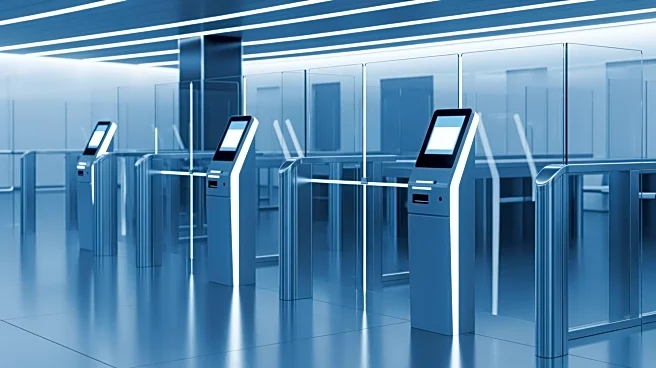
Travelers at Minneapolis-St. Paul International Airport are increasingly using a free service called MSP Reserve, which allows them to schedule a time to pass through security, thereby avoiding long lines. This service has seen a significant rise in usage,
with over 7,300 passengers utilizing it in one week in March, compared to just over 2,500 in late January. The program enables travelers to book a security slot up to a week in advance, receiving a QR code to access a special lane for expedited screening. This initiative has become particularly popular during peak travel times, such as early mornings and spring break, when wait times can be significantly reduced. The Metropolitan Airports Commission, which operates the airport, reports that the service has been well-received, with high usage rates at both Terminal 1 and Terminal 2.
Why It's Important?
The success of the MSP Reserve program highlights a growing trend in airport management towards enhancing passenger convenience and efficiency. By allowing travelers to bypass traditional security lines, the program not only improves the passenger experience but also helps manage airport congestion, especially during peak travel periods. This initiative is particularly relevant in the context of ongoing TSA staffing challenges, which have led to increased wait times at airports nationwide. The ability to reserve security slots could serve as a model for other airports seeking to improve operational efficiency and customer satisfaction. Additionally, the program's popularity underscores the demand for innovative solutions in the travel industry that prioritize passenger convenience and time management.
What's Next?
As the MSP Reserve program continues to gain traction, other airports may consider adopting similar systems to enhance their security processes. The recent passage of a measure to fund the TSA by the U.S. Senate could alleviate some staffing issues, potentially impacting the need for such reservation systems. However, the ongoing popularity of MSP Reserve suggests that travelers value the control and predictability it offers. Future developments may include the expansion of reservation slots or the integration of additional technologies, such as Touchless ID and e-Gate systems, to further streamline the security process. Stakeholders, including airport authorities and airlines, will likely monitor the program's impact on passenger satisfaction and operational efficiency.