





What's Happening?
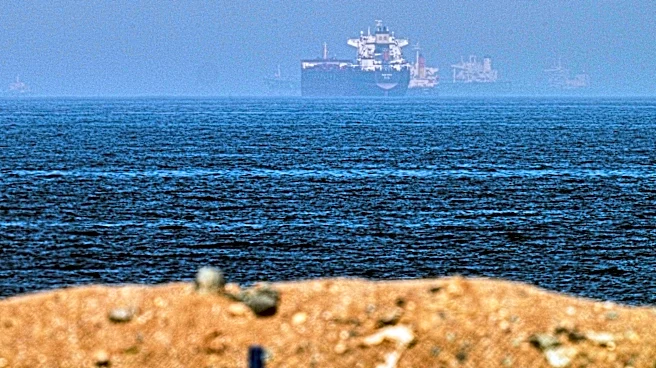
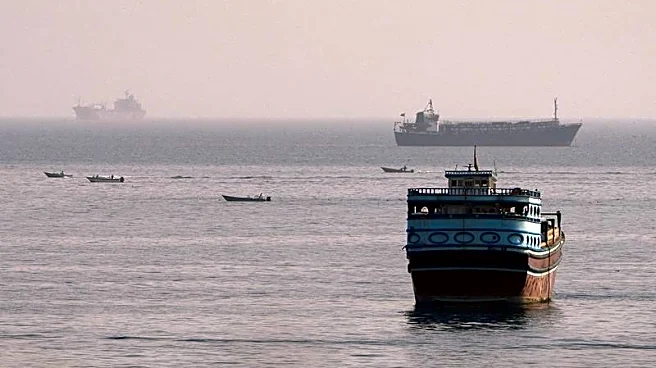
The United States, Iran, and Oman are close to finalizing an interim agreement to reopen the Strait of Hormuz, a critical maritime passage. The deal aims to restore a ceasefire and regulate maritime traffic through the strait for sixty days. As part of the agreement,
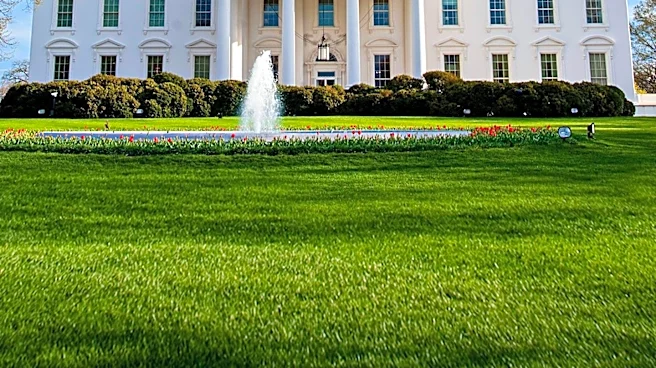
naval mines will be cleared from a key shipping lane within thirty days. This development follows President Trump's decision to prioritize diplomatic efforts over military action against Iran, after consultations with Gulf partners. The agreement is seen as a significant step towards reducing tensions in the region and ensuring the safe passage of ships through the strait.
Why It's Important?
The Strait of Hormuz is a vital waterway for global oil shipments, and its closure or disruption can have significant implications for international energy markets. The interim deal represents a diplomatic victory, potentially easing geopolitical tensions and stabilizing oil prices. It also reflects a shift in U.S. strategy towards engaging in dialogue rather than military confrontation. The agreement could pave the way for further negotiations on broader issues, such as Iran's nuclear program and regional security. Successful implementation of the deal could enhance regional cooperation and contribute to long-term stability in the Middle East.
What's Next?
The focus will be on the implementation of the agreement, particularly the clearance of naval mines and the regulation of maritime traffic. Monitoring and enforcement mechanisms will be crucial to ensure compliance by all parties. The deal's success could lead to more comprehensive negotiations addressing other contentious issues, including Iran's nuclear activities and regional influence. The international community will be watching closely to see if this agreement can serve as a foundation for lasting peace and security in the region.