








What's Happening?
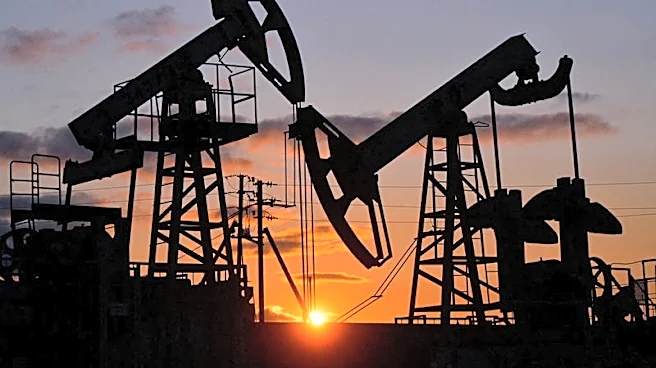
The Platts Dubai benchmark, crucial for pricing nearly 18 million barrels of oil per day, is under significant strain due to disruptions in the Strait of Hormuz. This chokepoint, vital for global oil transport, has seen reduced tanker traffic, complicating
the pricing of oil that cannot be loaded. Despite announcements from Washington that the Strait is open, the situation remains tense. Platts has reduced the number of deliverable grades in its pricing basket, impacting the market. The benchmark's reliability is questioned as Asian buyers seek alternative pricing methods. The Oman crude, while bypassing the Strait, has not fully compensated for the shortfall, leaving Murban crude to bear the brunt of the load.
Why It's Important?
The disruption in the Strait of Hormuz highlights the vulnerability of global oil pricing mechanisms to geopolitical tensions. The Platts Dubai benchmark's challenges could lead to increased volatility in oil prices, affecting global markets. Asian buyers' shift to alternative pricing methods may signal a long-term change in oil trading dynamics. The situation underscores the need for more resilient and diversified oil pricing systems to mitigate the impact of regional conflicts on global energy markets.
What's Next?
Stakeholders in the oil market may push for reforms in the Platts Dubai benchmark to enhance its resilience. The ongoing geopolitical tensions could prompt countries to seek alternative routes and methods for oil transport and pricing. The situation may also accelerate investments in energy security and diversification strategies, as countries aim to reduce their dependence on vulnerable chokepoints like the Strait of Hormuz.