






What's Happening?
The U.S. Department of Agriculture (USDA), Agricultural Research Service (ARS), specifically its SCINet/Artificial Intelligence (AI) Center of Excellence Research Participation Program, is offering a postdoctoral research opportunity. This fellowship
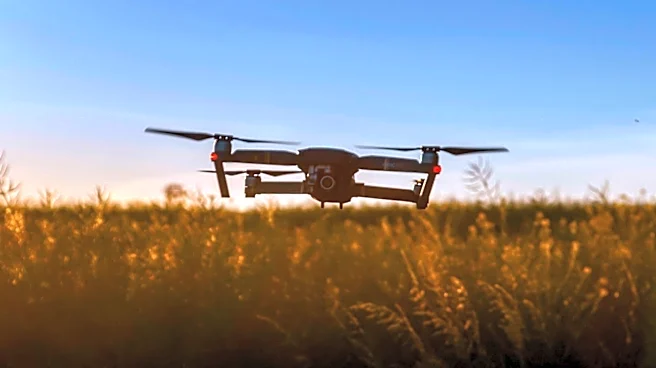
focuses on the AI analysis of Unoccupied Aerial Vehicle (UAV) imagery for rangeland ecology. The selected fellow will work with the Range and Meadow Forage Management Research Unit in Burns, Oregon. The program aims to develop and apply new technologies, including AI and machine learning (ML), to address complex agricultural problems. Participants will gain experience in UAV imagery collection and processing, deep learning methods, and understanding rangeland vegetation communities in Oregon and Idaho. The research involves applying and improving an existing AI pipeline to classify rangeland plant species and using transfer learning to adapt deep learning models for imagery analysis across various UAV sensors and conditions. This initiative is part of ARS's broader mission to provide scientific tools and innovative solutions for American farmers, producers, industry, and communities.
Why It's Important?
This postdoctoral fellowship is significant for advancing agricultural science and technology in the U.S. By leveraging AI and UAV imagery, researchers can develop more efficient and accurate methods for monitoring and managing rangeland ecosystems. This has direct implications for American farmers and producers, enabling better assessment of forage quality, biodiversity, and the presence of invasive plant species across vast areas. Improved rangeland management can lead to more sustainable agricultural practices, enhanced ecological health, and increased economic competitiveness for the U.S. agricultural sector. The training provided in data science, scientific computing, and AI/ML will also contribute to building a skilled workforce capable of tackling future agricultural challenges. Furthermore, the focus on open-source software development ensures that these technological advancements can be widely adopted and benefit a broader community of researchers and practitioners.
What's Next?
The anticipated start date for this postdoctoral appointment is January 2027, though it is flexible. The initial appointment will be for one year, with a possibility of renewal for a second year based on mentor recommendation and ARS approval. The selected fellow will engage in full-time research, receiving a monthly stipend and a supplement for health insurance. They will continue to develop and publish workflows and code repositories for open-source software related to UAV imagery processing and ecological community dynamics. The research is expected to lead to the identification and pursuit of ecological questions related to community ecology, invasive species, pollinator floral resources, restoration, and wildfire burn severity. The program also includes opportunities for online courses in scientific topics like R, Python, and statistics, and for developing collaboration and leadership skills through workshops and group experiences.
Beyond the Headlines
Beyond the immediate scientific advancements, this initiative highlights a growing trend in agriculture: the integration of advanced technologies like AI and drones to address complex environmental and production challenges. The emphasis on interdisciplinary collaboration, bringing together plant ecology, remote sensing, and computer science, underscores the multifaceted nature of modern agricultural research. This approach not only fosters innovation but also ensures that solutions are comprehensive and applicable to real-world scenarios. The program's commitment to open-source development is crucial for democratizing access to these powerful tools, potentially accelerating their adoption and impact across the agricultural landscape. This fellowship also represents an investment in human capital, cultivating a new generation of scientists equipped with the skills to navigate the evolving demands of sustainable agriculture and environmental stewardship.