






What's Happening?
The Trump administration has announced a plan to establish a $1.8 billion fund aimed at compensating individuals who claim they were wrongly investigated or prosecuted. This initiative, known as the 'Anti-Weaponization Fund,' is unprecedented in its use
of public funds and has sparked bipartisan criticism in Congress. The fund's creation follows President Trump's decision to drop a $10 billion lawsuit against the IRS over leaked tax records, in exchange for setting up this compensation mechanism. A five-member commission, appointed by acting Attorney General Todd Blanche, will oversee the distribution of funds, with the power to authorize payments to eligible applicants. The fund is set to expire in December 2028, with any remaining money redirected to a federal agency of Trump's choosing.
Why It's Important?
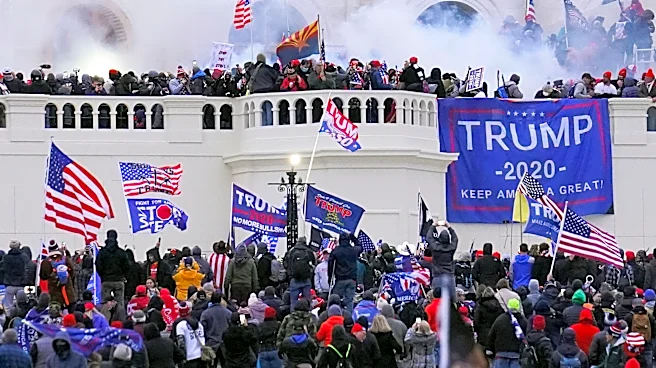
The establishment of this fund has significant implications for public policy and the use of taxpayer money. Critics argue that it could potentially allow for payments to individuals involved in the January 6 Capitol riot, raising ethical and legal concerns. The fund's transparency and the criteria for eligibility are also under scrutiny, with some lawmakers questioning the lack of detailed financial analysis justifying the $1.8 billion allocation. The fund's existence highlights ongoing tensions between the Trump administration and its critics, particularly regarding the handling of investigations perceived as politically motivated. This development could influence future discussions on government accountability and the use of public funds for legal settlements.
What's Next?
The fund is likely to face legal challenges, with at least three federal lawsuits already filed seeking its abolition. These lawsuits argue that the fund violates federal statutes and constitutional provisions, including the 14th Amendment. Congressional Democrats have pledged to investigate the fund if they regain control of the House, potentially leading to further political and legal battles. The fund's implementation and the criteria for awarding payments will be closely monitored by both supporters and opponents, with potential implications for future administrations' handling of similar issues.