




What's Happening?
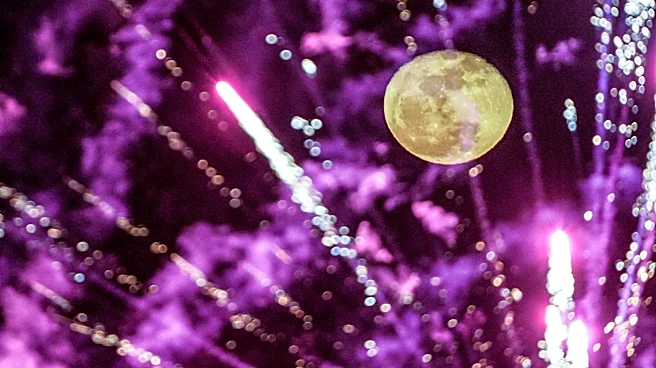
A rare Blue Moon is set to appear on Sunday, May 31, marking a unique celestial event. Despite its name, the moon will not actually appear blue. The term 'Blue Moon' refers to the occurrence of a second full moon within a single calendar month, with the first
being the Flower Moon. This phenomenon is uncommon, as full moons typically occur every 29.5 days. In rare instances, the moon can appear bluish due to atmospheric particles like smoke or volcanic ash scattering light. The phrase 'once in a blue moon' originates from the rarity of this event. Skywatchers are encouraged to capture and share images of the Blue Moon with local news outlets.
Why It's Important?
The Blue Moon event is significant as it highlights the infrequent nature of such celestial occurrences, drawing attention to astronomical phenomena and encouraging public interest in space and science. This event provides an opportunity for educational engagement, particularly in schools and communities interested in astronomy. It also serves as a reminder of the natural cycles and the beauty of the night sky, fostering a sense of wonder and curiosity about the universe. The Blue Moon can also impact cultural and social activities, as people gather to observe and celebrate this rare event.
What's Next?
Following the Blue Moon, there will be several more full moons throughout the year, each with its own unique characteristics and cultural significance. These include the Strawberry Moon in June and the Buck Moon in July. Stargazers and astronomy enthusiasts can look forward to these events as opportunities to further explore and appreciate the night sky. Additionally, local astronomical societies may organize events and gatherings to observe these celestial phenomena, promoting community engagement and education.