







What's Happening?
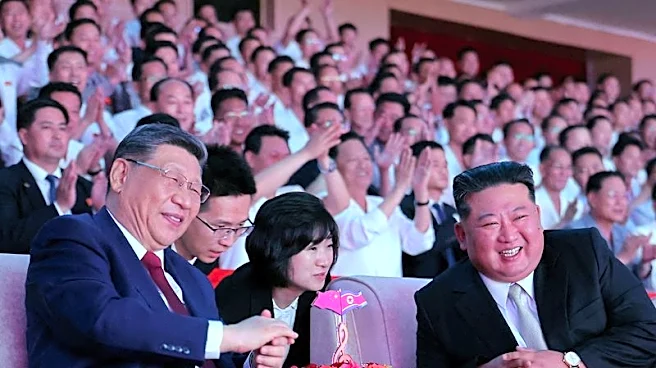
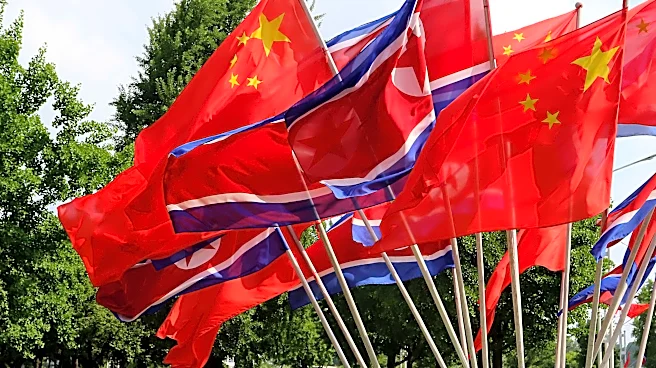
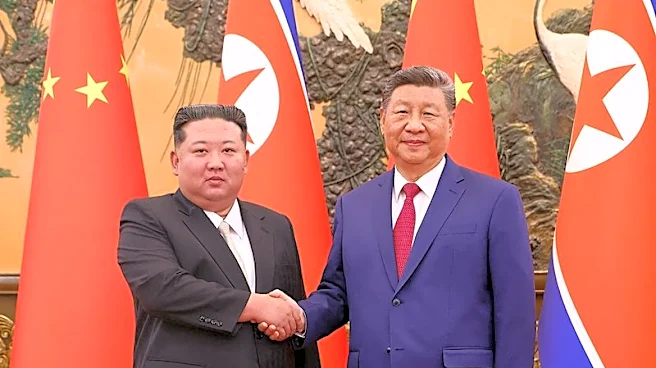
Chinese President Xi Jinping has completed a visit to North Korea, marking a significant moment in the relationship between the two countries. During the visit, Xi and North Korean leader Kim Jong Un reaffirmed their commitment to strengthening ties,
emphasizing mutual support and strategic stability. The visit coincided with the 65th anniversary of the friendship treaty between the two nations. While the visit was framed as a celebration of their enduring relationship, analysts noted that the official summaries from both countries highlighted different priorities. China's state media focused on practical state-to-state ties and initiatives for international order, while North Korea emphasized regime dignity and a special relationship with China. Notably, discussions on North Korea's nuclear weapons program or its relations with the United States were absent from the official reports, suggesting a focus on neighborly ties rather than contentious issues.
Why It's Important?
The visit underscores China's strategic interest in maintaining influence over North Korea, especially as Pyongyang strengthens ties with Russia. For North Korea, the visit serves as a reminder of China's pivotal role as its main benefactor. The reaffirmation of ties between the two countries could have implications for regional stability and international relations, particularly concerning the United States. The absence of discussions on North Korea's nuclear program or U.S. relations suggests that China may not be positioning itself as a mediator in these areas, focusing instead on bilateral relations. This development could impact U.S. diplomatic strategies in the region, as China and North Korea present a united front on certain issues, such as opposition to U.S. policies in Taiwan.
What's Next?
Future interactions between China and North Korea may focus on enhancing trade and tourism, as China is North Korea's largest trade partner. The visit may lead to increased high-level exchanges and restoration of transport links, as indicated by Chinese proposals. However, the broader geopolitical implications remain uncertain, particularly regarding North Korea's nuclear ambitions and its relations with the U.S. Analysts suggest that while the visit strengthens bilateral ties, it may not catalyze renewed U.S.-North Korea talks. The international community will likely monitor how these developments influence regional dynamics and the strategic calculations of other stakeholders, including South Korea and Japan.
Beyond the Headlines
The visit highlights the complex dynamics of China-North Korea relations, where both countries seek to project an image of equality and mutual respect. North Korea's emphasis on regime dignity and equal partnership with China reflects its desire to avoid appearing subordinate. This narrative aligns with North Korea's broader strategy of maintaining sovereignty and independence in its international relations. The visit also amplifies anti-U.S. and Taiwan-related messages, reinforcing the ideological alignment between China and North Korea. These developments could influence the cultural and political discourse in both countries, as they navigate their roles on the global stage.