



What's Happening?
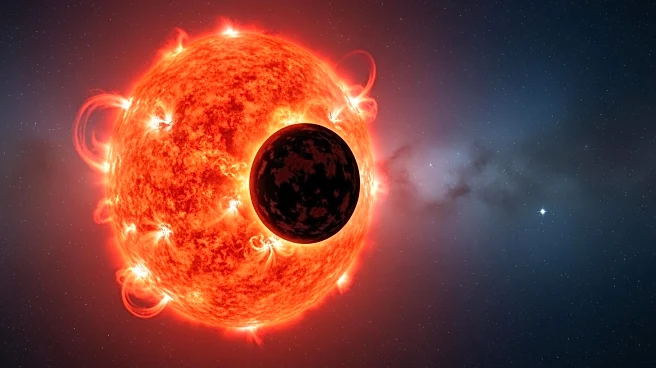
A new study suggests that as stars age, they may consume their closest planets, providing a potential glimpse into Earth's distant future. Researchers, using data from NASA's Transiting Exoplanet Survey Satellite (TESS), have observed that planets become
rarer around aging stars, indicating that these stars may engulf or destroy nearby planets. This phenomenon is attributed to the expansion of stars into red giants, which can lead to the tidal decay and eventual destruction of orbiting planets.
Why It's Important?
This research offers valuable insights into the long-term evolution of planetary systems and the fate of planets as their host stars age. Understanding these processes is crucial for astronomers studying the lifecycle of stars and the potential future of our solar system. The findings also contribute to the broader field of exoplanet science, enhancing our knowledge of how planetary systems evolve over time. This study may influence future astronomical research and missions aimed at exploring the interactions between stars and their planets.
What's Next?
The study paves the way for further research into the interactions between aging stars and their planets. Upcoming missions, such as the European Space Agency's Plato Mission, are expected to provide more data on this phenomenon. Scientists will continue to analyze the effects of tidal decay and other processes that contribute to planetary destruction. This research could lead to new models and theories about the lifecycle of planetary systems and the potential for life on planets orbiting aging stars.