






What's Happening?
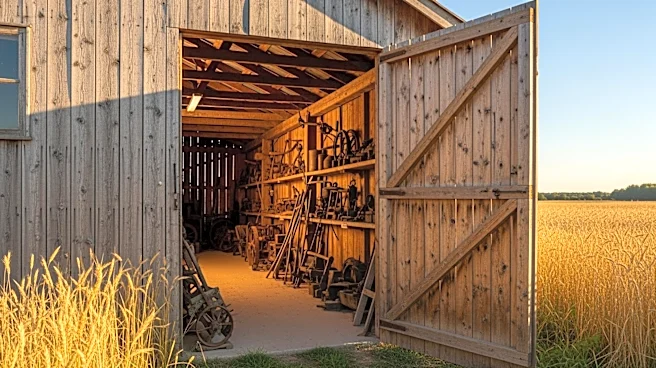
The Bagg Bonanza Farm in North Dakota offers a glimpse into the history of early industrial agriculture in the United States. Operated by Frederick and Sophia Bagg from 1915 to 1935, the farm covered up to 7,000 acres and functioned like a factory, utilizing
labor division and management techniques from other industries. The farm primarily grew wheat, corn, and clover, and its large-scale operations were facilitated by the completion of railroads, which enabled the transportation of large harvests to market. Today, the farm is preserved as a museum, showcasing multiple residential buildings and farm-related outbuildings.
Why It's Important?
The preservation of the Bagg Bonanza Farm as a museum provides valuable insights into the evolution of agricultural practices and the impact of industrialization on farming. By maintaining this historical site, the farm serves as an educational resource for understanding the development of large-scale commercial farming operations and their role in shaping the agricultural landscape. The farm's history highlights the importance of infrastructure, such as railroads, in enabling agricultural expansion and market access. It also reflects the broader economic and social changes brought about by industrialization in rural America.
What's Next?
The Bagg Bonanza Farm continues to operate as a museum, offering educational programs and events that highlight its historical significance. The farm hosts various activities, including the annual Bagg Farm Pumpkin Patch event, which benefits local food banks. As interest in agricultural history and heritage tourism grows, the farm may attract more visitors and researchers, contributing to the local economy and community engagement. The preservation of such sites also encourages discussions about sustainable farming practices and the future of agriculture in the context of historical lessons.