





What's Happening?
A new provision in California's state budget bill, Senate Bill 114, signed into law by Governor Gavin Newsom, prohibits the city of Encinitas from removing a separated bike lane on Santa Fe Drive for at least five years. This state intervention overrides
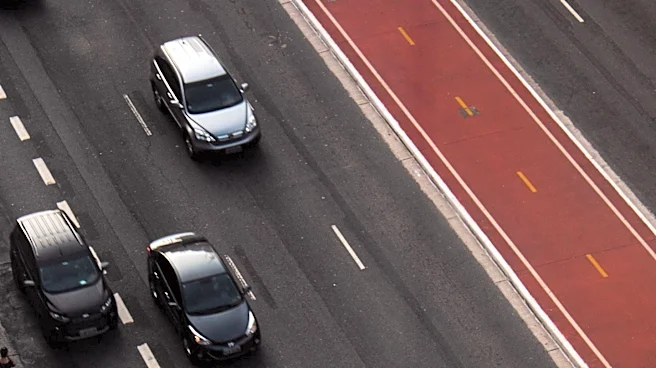
the Encinitas City Council's plans to modify the bike lane, which was part of a $4 million roadway overhaul project completed last year. The project included separated bike lanes, narrower vehicle lanes, and back-in parking spots. Encinitas Mayor Bruce Ehlers has criticized the state's action as 'unbelievably sneaky' and indicated that the city is exploring legal options. The provision stipulates that if Encinitas violates these conditions, it must return $3.09 million in state grant money received for the project. After five years, the city can remove the bike lane only if the removal results in equal or greater safety, accessibility, and mobility for non-motorized users.
Why It's Important?
This development highlights a significant conflict between state and local governance regarding urban planning and infrastructure projects, particularly in the context of active transportation. The state's move to enforce the retention of the bike lane underscores a broader commitment to promoting cycling safety and accessibility, potentially setting a precedent for similar projects across California. For Encinitas, the decision has financial implications, as the city risks losing substantial state funding if it proceeds with its planned modifications. It also reflects a political divide within the community and local government, with the current City Council majority, which is not registered Democrat, favoring changes to the bike lane, while State Senator Catherine Blakespear, a Democrat, champions its retention for public safety. This situation could influence future local elections and the dynamics of state-local cooperation on infrastructure development.
What's Next?
Encinitas city officials are currently exploring their legal options to challenge the state law. This could lead to a legal battle between the city and the state of California over local control versus state mandates in infrastructure development. The ongoing debate about the Santa Fe Drive bike lane is also a significant issue in the current mayoral election in Encinitas, with Mayor Ehlers running against a Democrat, Rimga Viskanta, who supports keeping the protected bike lane. The outcome of this election could further shape the city's approach to the issue. Additionally, the state's enforcement of the bike lane's retention may prompt other California cities to re-evaluate their own infrastructure projects and their alignment with state transportation goals, particularly concerning grant funding and project modifications.
Beyond the Headlines
The dispute over the Santa Fe Drive bike lane delves into deeper questions about urban design philosophy and the balance between different modes of transportation. The debate reflects a national trend of increasing investment in cycling infrastructure, often met with resistance from motorists concerned about traffic flow and parking. The differing views on the safety of separated bike lanes versus painted lanes, and the potential for 'right hook' accidents, highlight the complexities of designing urban spaces that cater to all users. This case also touches upon the ethical considerations of state-level intervention in local planning decisions, especially when grant funding is tied to specific project outcomes. The long-term implications could include a re-evaluation of how state grants are structured and the degree of autonomy local governments have in modifying projects after receiving state funds.