







What's Happening?
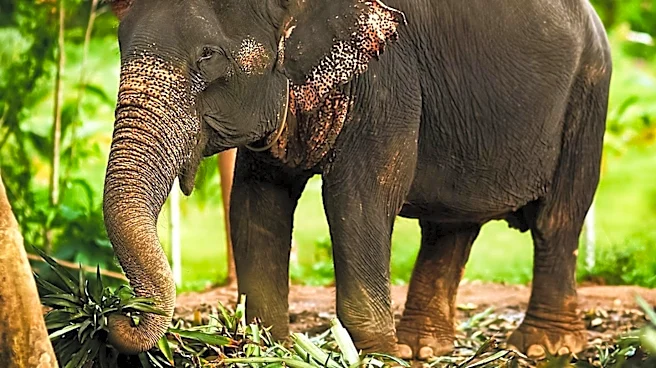
Sandro, an elephant resident at the Global Sanctuary for Elephants, is actively exploring his habitat and adapting to his new environment. Caretakers report that Sandro is spending his time deep within the sanctuary, discovering favorite spots with tall
grass and relaxing among the trees. While his explorations sometimes make him less immediately visible, his movements are often audible or indicated by moving trees. The care team occasionally needs to search for him, which is seen as a positive sign of his engagement with the expansive habitat. Sandro is described as a 'fast gentleman' when he decides to move, requiring quick action from his caretakers to keep pace. He typically returns closer to the fence around meal times, and his feeding schedule is varied to maintain his interest. Scott, a caretaker, recently caught Sandro in a calmer mood while delivering his lunch, noting areas of Sandro's body that need to build muscle, with expectations for continued improvement in his health and strength.
Why It's Important?
The successful adaptation and well-being of elephants like Sandro at sanctuaries such as the Global Sanctuary for Elephants highlight the critical role these facilities play in animal welfare. For the U.S., this underscores the growing public and organizational commitment to providing appropriate environments for rescued or retired captive elephants, moving away from traditional exhibition models. The sanctuary's efforts in providing a vast, stimulating habitat and individualized care contribute to the physical and psychological recovery of these animals. This model influences U.S. animal welfare standards and public perception, encouraging support for similar initiatives and potentially impacting policies related to elephant care and conservation within the country. The focus on natural behaviors and extensive space contrasts with the limitations often found in smaller enclosures, setting a benchmark for ethical animal management.
What's Next?
The Global Sanctuary for Elephants will continue to monitor Sandro's progress, focusing on his physical development and behavioral enrichment. The care team will likely maintain varied feeding schedules and observe his interactions with the habitat to ensure his ongoing well-being. The sanctuary's work with Sandro and other residents will continue to serve as a model for elephant care, potentially influencing other animal welfare organizations and governmental bodies in the U.S. to adopt similar practices. Ongoing communication from the sanctuary, such as blog updates and elephant diaries, will keep supporters informed and engaged, fostering continued financial and public support for their mission. This sustained engagement is crucial for the long-term viability of such sanctuaries and their ability to provide care for more elephants.
Beyond the Headlines
Sandro's story at the Global Sanctuary for Elephants reflects a broader societal shift in how humans interact with and perceive large, intelligent animals. The emphasis on providing a naturalistic environment and allowing elephants to express their innate behaviors challenges anthropocentric views and promotes a deeper understanding of animal sentience. For the U.S., this movement has ethical implications, prompting re-evaluation of practices in zoos, circuses, and other institutions that house elephants. It encourages a more compassionate approach to animal management, advocating for environments that prioritize the animals' intrinsic needs over human entertainment or convenience. The sanctuary's success with Sandro demonstrates that with dedicated resources and a commitment to ethical principles, significant improvements in the lives of captive elephants are achievable, fostering a more empathetic relationship between humans and wildlife.