
What's Happening?
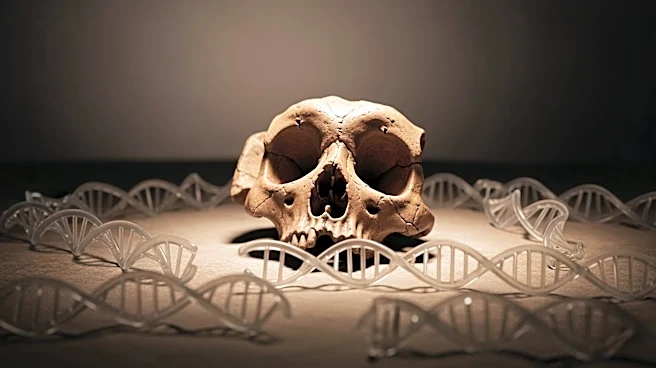
A recent study published in the journal Nature has revealed that natural selection has continued to shape human genes over the past 10,000 years. Researchers analyzed DNA from 15,836 ancient human remains
and identified 479 genetic variants that have been favored by natural selection. This challenges the previous belief that human evolution has been minimal in recent millennia. The study found that certain genetic mutations, such as those linked to celiac disease and smoking habits, have evolved significantly. The research highlights the complexity of human evolution and suggests that cultural and environmental changes have influenced genetic adaptations.
Why It's Important?
The findings of this study have significant implications for our understanding of human evolution and genetics. By identifying genetic variants that have been subject to natural selection, scientists can gain insights into how humans have adapted to changing environments and lifestyles. This research could inform medical and genetic studies by highlighting genes that may play crucial roles in health and disease. Understanding the evolutionary history of these genes could lead to better predictions of disease risk and the development of targeted therapies. The study also underscores the importance of considering evolutionary perspectives in genetic research.
Beyond the Headlines
The study's findings raise questions about the interplay between cultural evolution and genetic adaptation. As humans have developed agriculture, technology, and complex societies, these cultural shifts may have driven genetic changes. The research also highlights the potential for genetic variants to influence modern traits, such as educational attainment and lifestyle choices. This could lead to ethical discussions about the implications of genetic research on social and behavioral traits. Additionally, the study emphasizes the need for a broader geographic scope in genetic research to understand global patterns of human evolution.