






What's Happening?
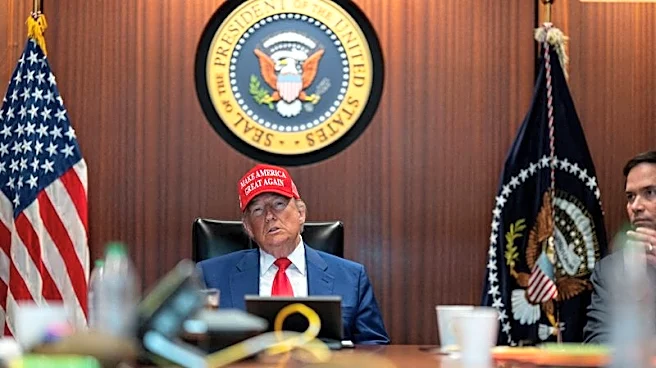
President Donald Trump has publicly supported the United Arab Emirates' decision to withdraw from the Organization of the Petroleum Exporting Countries (OPEC). Speaking at the White House, President Trump expressed that this move could be beneficial in reducing
the prices of gas and oil. The UAE's withdrawal marks a significant shift in the dynamics of global oil production and pricing, as OPEC has been a major player in regulating oil supply and prices worldwide. The decision by the UAE, a key member of OPEC, could influence other countries' positions within the organization and potentially alter the global oil market landscape.
Why It's Important?
The UAE's withdrawal from OPEC, endorsed by President Trump, could have substantial implications for the global oil market and the U.S. economy. By potentially lowering oil prices, this move might benefit consumers and industries reliant on oil, reducing costs for transportation and manufacturing. However, it could also lead to increased volatility in oil prices, affecting energy markets and economies dependent on oil exports. The U.S., as a major oil consumer and producer, could see shifts in its energy strategy and international relations with oil-exporting countries. This development underscores the complex interplay between national policies and global economic forces.
What's Next?
Following the UAE's withdrawal, other OPEC members may reassess their positions within the organization, potentially leading to further changes in global oil production strategies. The U.S. government and energy companies will likely monitor these developments closely to adjust their policies and strategies accordingly. Additionally, there may be diplomatic discussions between the U.S. and other oil-producing nations to address the potential impacts on global oil supply and pricing. The situation could also prompt discussions on energy independence and the transition to renewable energy sources.