
What's Happening?
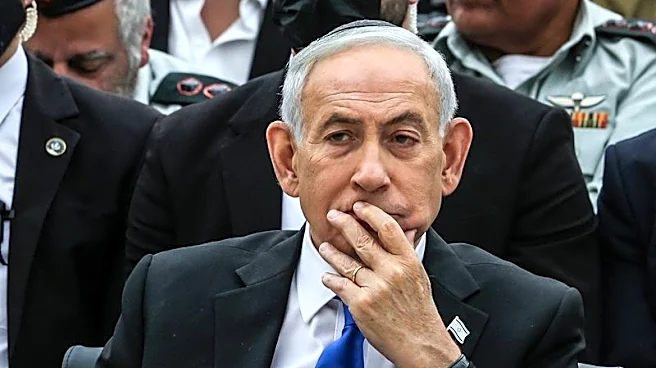
Israeli Prime Minister Benjamin Netanyahu has announced that he underwent successful treatment for early-stage prostate cancer. The treatment involved the removal of a small malignant tumor, which was
discovered during a routine medical check-up. Netanyahu's annual medical report, which was delayed by two months, confirmed that the tumor was removed without any trace left. The delay in the report's release was strategically planned to prevent Iran from using the information for propaganda purposes amid ongoing regional tensions. Netanyahu's health disclosure comes at a time when Israel is engaged in a fragile ceasefire with Iran and its allies, raising questions about potential succession plans should his health impact his ability to govern.
Why It's Important?
Netanyahu's health is a matter of national and international interest due to his pivotal role in Israeli politics and the ongoing geopolitical tensions in the Middle East. His decision to delay the release of his medical report highlights the strategic considerations in managing public information during times of conflict. The successful treatment of his cancer ensures continuity in leadership, which is crucial for Israel's stability, especially given the current regional dynamics. The situation underscores the delicate balance between personal health disclosures and national security considerations, particularly in a region where leadership changes can have significant geopolitical repercussions.
What's Next?
Netanyahu is expected to continue his duties as Prime Minister, with ongoing medical monitoring to ensure his health remains stable. The political landscape in Israel may see increased discussions about succession planning and leadership stability, especially if Netanyahu's health becomes a recurring concern. The broader regional implications include potential shifts in diplomatic strategies and alliances, as Israel navigates its relationships with neighboring countries and addresses internal political challenges.