




What's Happening?
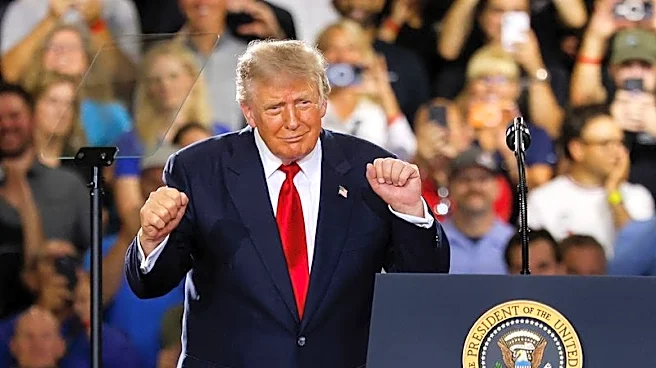
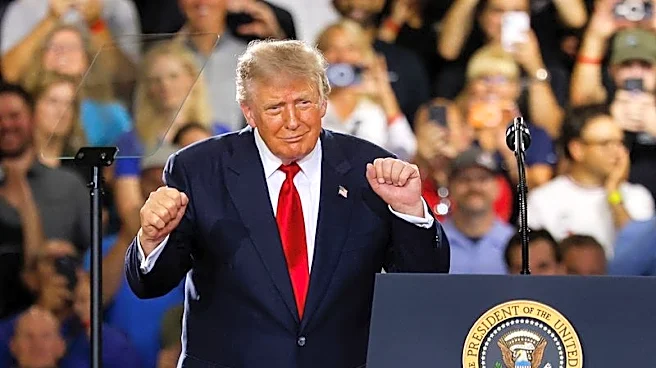
The Republican Party is experiencing a unique situation where, despite the unpopularity of its leader, President Trump, there is a notable lack of internal dissent. This contrasts with the Democratic Party, which is dealing with significant infighting.
The Republican strategy has largely relied on gerrymandering to maintain seats, as there is no moderate faction equivalent to the Democrats' Blue Dog caucus. This lack of internal debate and reliance on gerrymandering could pose challenges for the Republicans in future elections, particularly as they face a political landscape that is not favorable to them.
Why It's Important?
The absence of moderate voices within the Republican Party could hinder its ability to adapt and respond to changing political dynamics. As the party remains aligned with President Trump, whose approval ratings are low, it may struggle to appeal to a broader electorate. This situation could impact the party's performance in upcoming elections, as it may not be able to capitalize on Democratic weaknesses. The reliance on gerrymandering rather than policy innovation or broadening its appeal could limit the party's long-term viability and influence in U.S. politics.
What's Next?
Looking ahead, the Republican Party may need to reconsider its strategy to remain competitive. This could involve fostering internal debate and encouraging the emergence of moderate voices that can appeal to a wider range of voters. Additionally, the party may need to address key issues such as the cost of living and tariffs, which are significant concerns for voters. Without these changes, the party risks losing ground in future elections, particularly in swing states where voter sentiment may not align with the current party leadership.
Beyond the Headlines
The current state of the Republican Party highlights the potential risks of excessive unity and lack of dissent. While internal cohesion can be beneficial, it may also lead to complacency and an inability to adapt to new challenges. The situation underscores the importance of balancing unity with diversity of thought within a political party to ensure its resilience and relevance in a dynamic political environment.