

What's Happening?
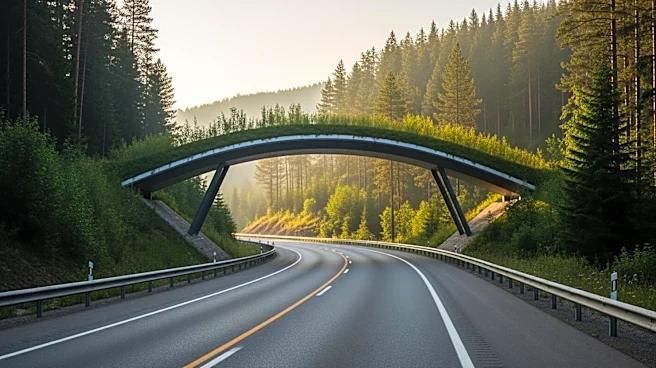
Lawmakers in the Mountain West region are advocating for increased funding to construct wildlife crossings, such as bridges and tunnels, to mitigate the high number of wildlife-vehicle collisions. These structures have proven effective, with a project
in northern Colorado reducing such crashes by 92% over five years. The initiative is gaining traction, with a bipartisan bill in Colorado proposing an optional $5 fee on vehicle registrations to fund additional crossings. This proposal follows the failure of a similar measure with a mandatory fee last year. The bill has already passed two Senate committees and could generate approximately $4 million annually. Federal funding from the Infrastructure Investment and Jobs Act has been instrumental in supporting these projects, but as state budgets tighten, creative funding solutions are necessary.
Why It's Important?
The push for wildlife crossings is significant due to the high economic and ecological costs of wildlife-vehicle collisions, which amount to $80 million annually in Colorado alone. These crossings not only protect wildlife but also enhance road safety for drivers. The initiative reflects a growing recognition of the need for sustainable infrastructure that balances human and environmental needs. As federal funding opportunities dwindle, states are exploring innovative funding mechanisms, such as voluntary contributions and specialty license plates, to sustain these projects. The success of these efforts could serve as a model for other regions facing similar challenges.
What's Next?
States are positioning themselves to secure remaining federal funds before the wildlife crossings grant program expires. In Utah, a new dedicated wildlife crossing account has been established, funded by the Department of Transportation budget and voluntary contributions. Idaho has passed a nonbinding resolution supporting wildlife crossings, while New Mexico has allocated $50 million for priority areas. These efforts indicate a regional commitment to expanding wildlife crossings, with potential for further legislative action and public engagement to ensure continued progress.