





What's Happening?
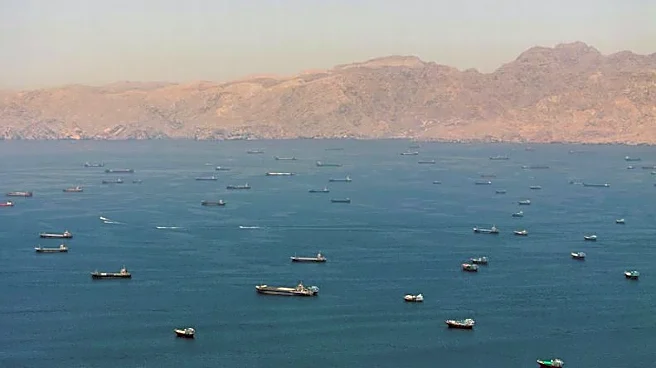
The United States has imposed new sanctions on the Persian Gulf Strait Authority, an Iranian body managing the Strait of Hormuz, citing links to the Islamic Revolutionary Guard Corps (IRGC). The sanctions, announced by the Treasury Department, are part of a broader
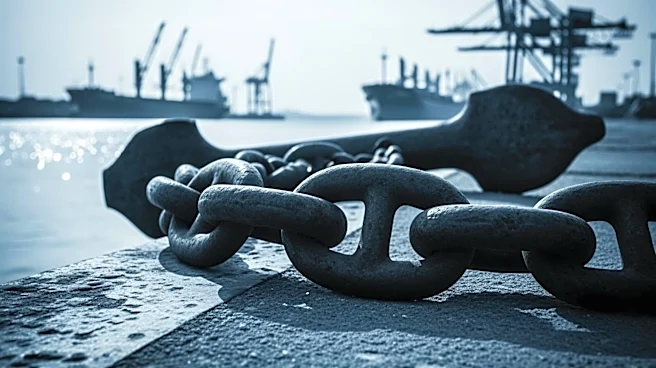
effort to curb Iran's economic activities and its alleged state-sponsored terrorism. The Persian Gulf Strait Authority has been accused of extorting vessels transiting the strait by imposing high tolls. The sanctions aim to disrupt Iran's control over this critical shipping route and pressure its leadership to negotiate an end to the conflict.
Why It's Important?
The sanctions are significant as they target a key component of Iran's economic strategy, which involves controlling a major global shipping route. The Strait of Hormuz is vital for the transit of a significant portion of the world's oil and gas, and Iran's control over it has led to increased energy prices. The U.S. sanctions are designed to weaken Iran's economic position and compel its leadership to negotiate an end to the conflict. This development has implications for global energy markets and highlights the ongoing geopolitical tensions in the region.
What's Next?
The future of the Strait of Hormuz and the broader conflict between the U.S. and Iran remains uncertain. If negotiations succeed, it could lead to a reopening of the strait and stabilization of energy prices. However, if talks fail, the U.S. may escalate its military and economic actions against Iran. The international community will continue to watch the situation closely, as the outcome could have significant implications for global trade and regional stability.