








What's Happening?
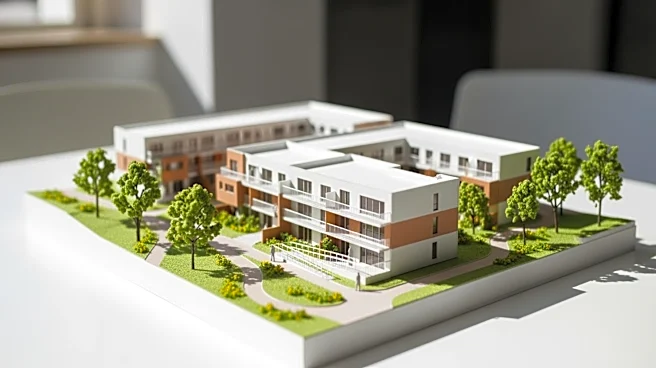
In Oakland County, Michigan, developers have initiated a significant housing project aimed at addressing the critical shortage of housing options for individuals with intellectual and developmental disabilities (IDD). The $35 million Auburn Oaks development,
spearheaded by Three Oaks Communities, will feature 55 homes, including a mix of condominiums, single-family, and townhomes. Of these, 17 condominiums and two single-family homes are specifically reserved for adults with IDD. This initiative is part of a broader effort to provide neuro-inclusive housing, ensuring that residents have access to necessary amenities and services to support independent living. The project is the third of its kind in Michigan, highlighting a growing recognition of the need for creative financing solutions to expand housing options for this underserved population.
Why It's Important?
The development of Auburn Oaks is a critical step in addressing the housing crisis faced by approximately 49,000 Michiganders with intellectual and developmental disabilities. As the population ages, particularly with many baby boomer parents, there is an increasing urgency to secure stable and supportive living environments for their children. This project not only provides much-needed housing but also sets a precedent for similar initiatives across the state and potentially the nation. By focusing on neuro-inclusive housing, the development aims to integrate individuals with IDD into the community, promoting inclusivity and independence. The success of such projects could influence public policy and encourage further investment in similar housing solutions.
What's Next?
Following the groundbreaking of the Auburn Oaks development, attention will likely turn to the implementation of best practices in neuro-inclusive housing. This includes ensuring that the necessary services and community support systems are in place for residents. Additionally, with two more similar projects planned in west Michigan and early planning stages for another development in New Jersey, there is potential for a broader regional impact. Stakeholders, including developers, policymakers, and advocacy groups, will be closely monitoring these projects to assess their effectiveness and scalability. The outcomes could drive future legislative and financial support for expanding housing options for individuals with disabilities.