





What's Happening?
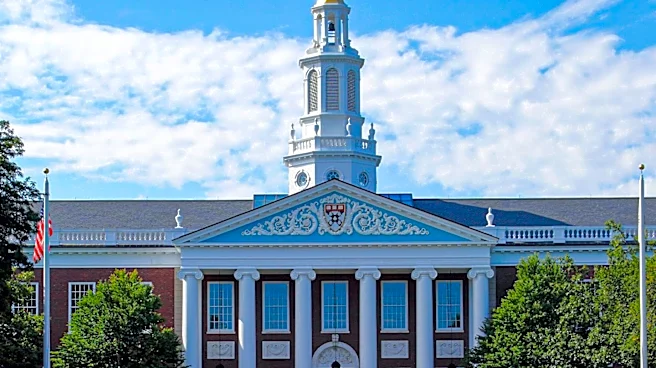
Harvard's 'Making Caring Common' (MCC) project has released its fourth 'Turning the Tide' report, highlighting a significant crisis in meaning and purpose among young people in the U.S. The report, co-authored by Dr. Rick Weissbourd and Trisha Ross Anderson,
reveals that 34% of teens and 51% of young adults aged 19-25 report having little to no meaning or purpose in their lives. This initiative, which began a decade ago, aims to reshape college admissions to prioritize ethical character, reduce excessive achievement pressure, and promote access and equity. MCC works with parents and educators, offering free resources to foster caring and compassion in children. The project emphasizes that colleges are interested in applicants' ethical character beyond just academic achievements, a message that has been reinforced through changes in essay questions and recommendation forms in some institutions.
Why It's Important?
The findings from the 'Turning the Tide' report underscore a critical societal issue: the decline in meaning and purpose among American youth. This trend has significant implications for mental health, with young adults experiencing higher rates of anxiety and depression. The report suggests that an overemphasis on individual success and achievement, often driven by college admissions pressures, can crowd out opportunities for young people to find deeper meaning. By advocating for a shift in college admissions to value ethical character and contributions to the community, MCC aims to counter this trend. This reorientation could lead to a generation of students who are not only academically proficient but also deeply engaged in their communities and committed to human rights, potentially fostering a more empathetic and civically minded society. The project also highlights the importance of authentic engagement in service and community work, rather than merely participating for college applications, which could lead to more genuine and impactful contributions.
What's Next?
The 'Making Caring Common' project plans to continue its advocacy for systemic and cultural changes in college admissions and youth development. Future initiatives include collaborating with states, such as Tennessee, to pilot programs like direct admissions with financial aid, aiming to make college access more equitable and less stressful. MCC will also focus on encouraging counselors and educators to help students identify energizing goals and engage in community service for its intrinsic value, rather than solely for college applications. The project will continue to provide resources for parents and educators to foster a school culture that values caring and compassion. The ongoing challenge will be to translate the growing interest in moral development into widespread, tangible changes in how colleges evaluate applicants and how society nurtures its youth, moving beyond incremental adjustments to achieve broader cultural shifts.
Beyond the Headlines
The 'Turning the Tide' report delves into deeper societal shifts contributing to the youth purpose crisis, including a decline in religious participation, which historically provided meaning, and the inward-looking focus of some psychotherapy cultures. It also points to the pervasive influence of technology and social media, which can foster a sense of dystopia and transactional relationships, further eroding meaning. The report challenges the notion that young people must have a single 'passion' to succeed, arguing that this expectation is often developmentally inappropriate and creates undue pressure. Instead, it advocates for cultivating a broader sense of purpose derived from meaningful engagement and contributions to others. This perspective suggests a fundamental re-evaluation of societal values, moving away from a sole focus on individual achievement towards a greater emphasis on collective well-being, human rights, and authentic connection, which could lead to a more resilient and compassionate society.