








What's Happening?
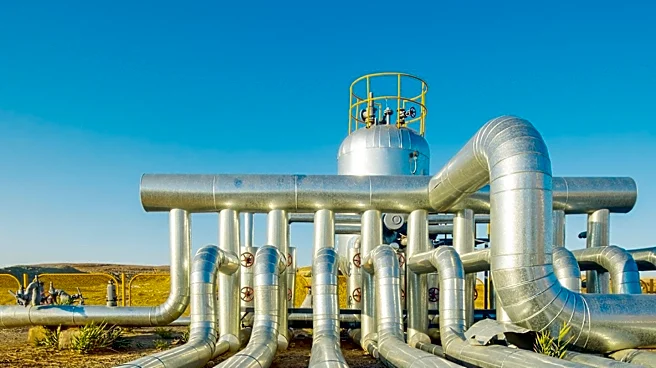
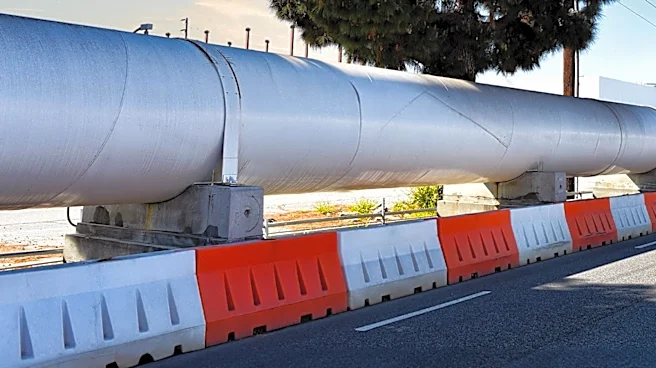
Kuwait Oil Company (KOC) has entered into a significant $16 billion infrastructure partnership with global investors Blackstone, Brookfield, and KKR. This joint venture involves a lease-and-leaseback agreement for KOC's entire domestic and export pipeline
network, spanning approximately 320 kilometers. The agreement grants the consortium a 49% stake, while KOC retains a 51% stake and full operational control. This deal marks the largest foreign direct investment in Kuwait's history and is expected to generate $7.85 billion in proceeds for KOC. The partnership aims to support Kuwait's economic diversification and KPC's goal of reaching a crude oil production capacity of 4 million barrels per day by 2035.
Why It's Important?
This partnership is a landmark in Kuwait's economic development, reflecting international confidence in the country's energy sector. The deal underscores Kuwait's strategic importance as a global energy producer and its ability to attract significant foreign investment despite regional geopolitical challenges. The proceeds from this investment will bolster Kuwait's capital expenditure plans, aiding in the country's long-term economic diversification efforts. For the U.S., this development highlights the growing involvement of American investment firms like Blackstone in global energy infrastructure, potentially influencing U.S. energy markets and investment strategies.
What's Next?
The joint venture is expected to close following customary regulatory approvals. As the partnership progresses, it may pave the way for further international investments in Kuwait's energy infrastructure. The success of this venture could encourage other countries in the region to pursue similar foreign investment strategies. Additionally, the deal may lead to increased collaboration between U.S. investment firms and Middle Eastern energy companies, potentially impacting global energy supply chains and investment flows.
Beyond the Headlines
This agreement not only strengthens Kuwait's position in the global energy market but also serves as a model for other nations seeking to attract foreign investment while maintaining control over strategic assets. The deal highlights the importance of international partnerships in achieving economic diversification and energy security. It also raises questions about the balance between foreign investment and national sovereignty, particularly in critical infrastructure sectors.