






What's Happening?
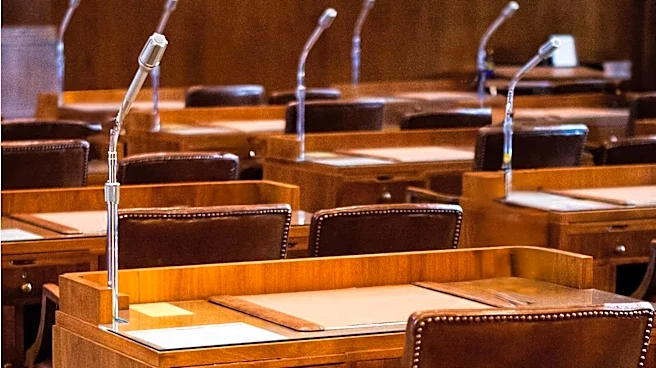
A bipartisan congressional hearing was held to discuss the economic opportunities and potential risks associated with artificial intelligence (AI) in various industries, including manufacturing, agriculture, and healthcare. The hearing, conducted by members
of Congress from Georgia and South Carolina, focused on fostering economic growth through AI while ensuring its responsible use. Experts testified that AI is enhancing industries by amplifying human expertise, but concerns were raised about AI potentially displacing workers and degrading job quality. U.S. Rep. Rick Allen emphasized the need for policies that encourage responsible AI adoption to benefit American workers. Ajikumar Parayil, CEO of Manus, highlighted AI's role in optimizing production and improving quality in biotech. Meanwhile, Dr. Jeffery Talbert noted AI's value in healthcare for improving diagnoses. However, union representatives warned of AI's potential to undermine job quality without proper regulations.
Why It's Important?
The hearing underscores the dual nature of AI as both a driver of economic growth and a potential disruptor of the workforce. AI's ability to enhance productivity and innovation presents significant opportunities for U.S. industries to remain competitive globally. However, the potential displacement of workers and the degradation of job quality pose challenges that require careful policy consideration. The discussion highlights the need for a balanced approach that maximizes AI's benefits while mitigating its risks. Policymakers, businesses, and labor organizations must collaborate to ensure that AI adoption leads to equitable economic growth and job creation, rather than exacerbating inequality and job insecurity.
What's Next?
The hearing suggests that further legislative and regulatory actions may be needed to address the challenges posed by AI. Policymakers are likely to explore frameworks that promote responsible AI use, protect workers' rights, and ensure that technological advancements do not come at the expense of communities. Ongoing dialogue between industry leaders, labor representatives, and government officials will be crucial in shaping policies that foster innovation while safeguarding societal interests. The outcome of these discussions could influence future legislation and regulatory measures aimed at balancing AI's economic potential with its social implications.