







What's Happening?
The Japanese government is funding a project to provide renewable energy solutions to hospitals in Cuba, addressing the country's ongoing energy crisis. This initiative, led by the Cuban Ministry of Public Health in collaboration with the United Nations
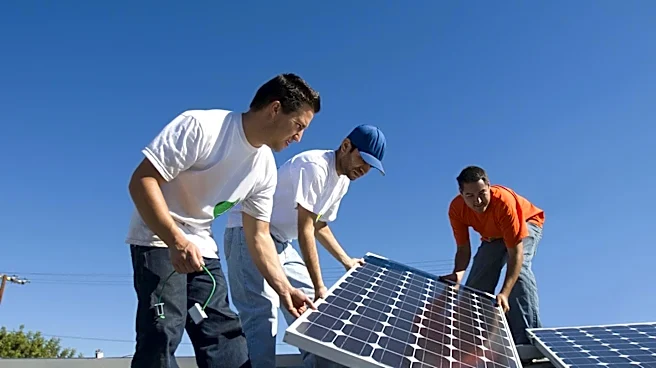
Development Program and other local entities, involves the installation of photovoltaic (PV) equipment in ten hospitals across Cuba. The project aims to ensure the continuity of medical services during frequent power outages by equipping hospitals with solar panels, batteries, and necessary support equipment. The initiative also focuses on enhancing the technical and institutional capacities of hospital staff to manage and maintain the solar technology. With a budget of $6.5 million, the project is set to be implemented over two years, benefiting approximately 2.6 million patients and 27,500 healthcare workers.
Why It's Important?
This project is crucial as it addresses the severe energy shortages in Cuba, which have been exacerbated by external restrictions and sanctions. Frequent blackouts have significantly impacted the country's social infrastructure, particularly hospitals, where power outages threaten critical medical services and the operation of life-saving equipment. By providing a reliable energy source, the project aims to stabilize healthcare services and improve the overall resilience of the Cuban health system. Additionally, the initiative aligns with Cuba's national priorities to integrate renewable energy solutions, potentially serving as a model for other sectors and regions facing similar challenges.
What's Next?
The project is expected to be completed over the next two years, with ongoing efforts to strengthen the technical skills of hospital staff in managing solar technology. The Japanese government, through the Japan International Cooperation Agency, continues to support Cuba's energy sector, including a recent $20 million donation for developing photovoltaic parks. This collaboration may lead to further international partnerships and investments in Cuba's renewable energy infrastructure, potentially expanding to other critical sectors such as education and banking.
Beyond the Headlines
The initiative reflects a broader trend of international cooperation in addressing energy crises in developing countries. It highlights the role of renewable energy as a sustainable solution to power shortages and its potential to transform social infrastructure. The project also underscores the importance of building local capacities to manage and maintain new technologies, ensuring long-term sustainability and independence from external energy sources.