





What's Happening?
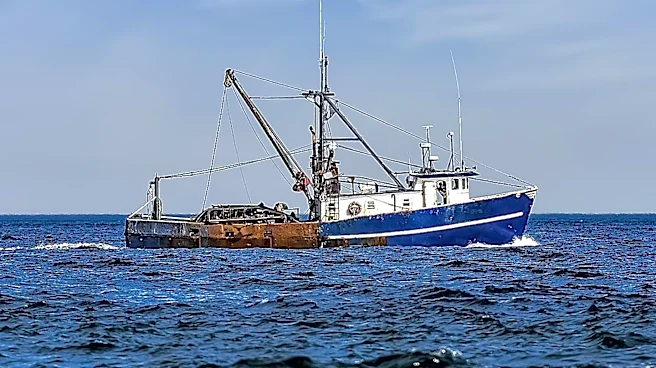
A new report by the French non-profit BLOOM indicates that a small fraction of Europe's fishing fleet, specifically 638 'mega-industrial' trawlers measuring 108 feet or longer, are responsible for the majority of environmental damage and pose a significant
threat to food security. These vessels, while representing only one percent of the 60,000 European-flagged fishing boats, account for 55 percent of the fish caught by European vessels. They predominantly use 'towed' gear like bottom trawling nets, which indiscriminately ensnare marine life, leading to high volumes of unwanted bycatch and the destruction of seabed habitats. BLOOM's founder, Claire Nouvian, describes these operations as 'counter-fishing' due to their long-term ecological damage. The report highlights that these large ships often operate far from their home ports, sometimes as far as 2,600 miles, and are increasingly catching fish for the fishmeal and fish oil industry rather than for human consumption, particularly in African waters.
Why It's Important?
The findings of the BLOOM report have significant implications for the sustainability of marine ecosystems, global food security, and the economic viability of small-scale fishing communities. The destructive fishing practices of 'mega-industrial' trawlers contribute to the depletion of fish stocks and the degradation of ocean habitats, which can have cascading effects on marine biodiversity and the overall health of the oceans. This issue is particularly critical as the European Union prepares to allocate its almost $8 billion fisheries budget for 2028-2034. The report suggests that current subsidies disproportionately favor industrial fleets, with 80 percent of European fisheries funding over the last two decades going to these operations, while small-scale coastal fishers received only one percent. This imbalance exacerbates social and economic inequalities within the fishing industry, leading to despair among small-scale fishers who are being squeezed out by larger, more destructive operations. The long-term ecological damage also threatens the future availability of fish, impacting food security for populations reliant on marine resources.
What's Next?
Environmentalists are advocating for the dismantling of these 'mega-industrial' ships, proposing that the European Parliament allocate $3 billion to decommission them by 2035 and repurpose them for other uses, such as goods transportation. BLOOM is also calling for a more equitable distribution of fisheries subsidies, suggesting an equal split between conservation efforts and support for small-scale fisheries, given that only 2.7 percent of subsidies have been allocated to ocean protection since 1994. The establishment of a 'maximum tolerable length' of 108 feet for fishing vessels is being proposed to alleviate pressure on fish stocks and redistribute quotas to coastal fishers. This transition, according to Claire Nouvian, could revitalize ocean health, repopulate marine life, and ultimately increase fish catches in the long run. The upcoming decisions regarding the EU's fisheries budget will be crucial in determining the future direction of European fishing policies and their impact on ocean sustainability.
Beyond the Headlines
The issue of 'mega-industrial' trawlers extends beyond environmental concerns, touching upon ethical and social dimensions of resource management. The report implicitly raises questions about the true cost of industrial fishing, not just in ecological terms but also in terms of social equity and the livelihoods of traditional fishing communities. The practice of catching fish for conversion into fishmeal and fish oil, rather than direct human consumption, highlights a broader economic model that prioritizes industrial profit over sustainable food systems and local economies. This 'counter-fishing' approach, as termed by BLOOM, suggests a fundamental misalignment between current fishing practices and long-term ecological and societal well-being. The call for dismantling these vessels and reallocating subsidies represents a potential paradigm shift towards a more sustainable and equitable approach to marine resource management, emphasizing conservation and supporting smaller-scale, less impactful fishing methods. This could set a precedent for other regions grappling with similar challenges in their fishing industries.