





What's Happening?
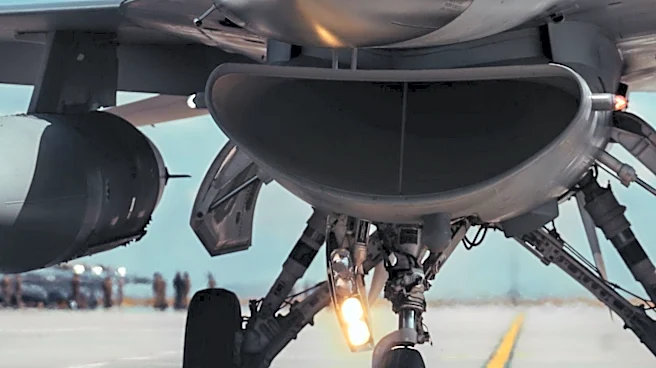
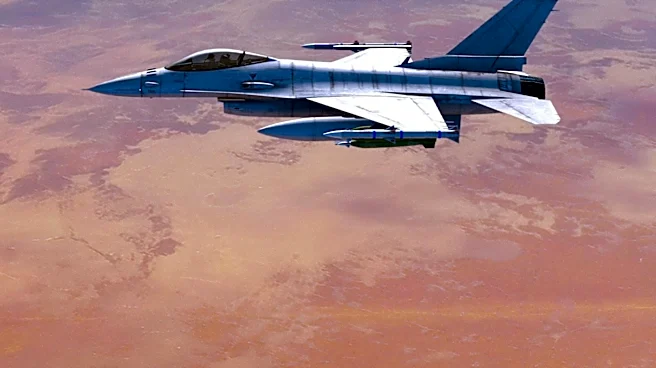
The U.S. Air Force plans to acquire 65 iridium catalysts for the F-16 Fighting Falcon's emergency power units. This procurement is crucial for maintaining the aircraft's flight controls in the event of an engine failure. The F-16 support office at Hill
Air Force Base in Utah issued a request on the federal contracting site, indicating an intent to award a contract by March 2027, with deliveries expected around September 2027. While the Air Force is preparing for a sole-source purchase, it is also seeking feedback from other potential suppliers until December 2 to determine if the acquisition can be competitive or designated as a Small Business Set-Aside. The catalysts, identified as Shell 405, are iridium-based materials also used in spacecraft thrusters. They enable the emergency power unit to break down hydrazine fuel quickly without an external ignition source, generating gas to drive a turbine that powers an electrical generator and hydraulic pump. This system provides approximately 17 minutes of backup power, allowing pilots to retain control of the fly-by-wire jet after an engine shutdown.
Why It's Important?
This procurement is vital for the operational safety and readiness of the F-16 fleet, a cornerstone of U.S. air power and a widely used combat aircraft globally. Ensuring the reliability of emergency power units directly impacts pilot safety and the successful completion of missions, particularly in critical situations like engine failure. The F-16's fly-by-wire system relies heavily on electrical and hydraulic power, making a robust backup system indispensable. The Air Force's consideration of a Small Business Set-Aside also highlights an effort to engage a broader range of suppliers, potentially fostering competition and innovation within the defense industrial base. The continued investment in F-16 maintenance and upgrades, even as newer aircraft like the F-35 are introduced, underscores the F-16's enduring role in national defense and international security operations, affecting U.S. military capabilities and its allies who also operate the F-16.
What's Next?
The U.S. Air Force will continue to evaluate supplier responses until December 2 to determine the procurement strategy for the iridium catalysts. Following this, a contract is expected to be awarded by March 2027. The successful supplier will then be tasked with delivering the 65 catalysts to Hill Air Force Base around September 2027. This timeline suggests a proactive approach to maintaining the F-16 fleet's operational integrity. The outcome of this procurement could influence future acquisition strategies for specialized components, potentially opening doors for more competitive bidding or solidifying relationships with existing sole-source providers. The continuous effort to upgrade and maintain the F-16, including its emergency systems, indicates that the aircraft will remain a critical asset for the U.S. Air Force and its allies for the foreseeable future.
Beyond the Headlines
The reliance on specialized materials like iridium catalysts for critical aerospace components underscores the complex supply chains and advanced technological requirements inherent in modern military aviation. The fact that the drawings and specifications for this part are 'Not owned by the Government' highlights potential challenges in diversifying the supplier base, as new entrants would need to reverse-engineer or independently develop equivalent parts. This situation could raise questions about intellectual property rights, national security implications of sole-source dependencies, and the long-term sustainability of maintaining legacy aircraft systems. Furthermore, the use of iridium, a rare and expensive metal, points to the high cost of maintaining cutting-edge defense technology and the strategic importance of securing access to such materials. The continuous need for such components also reflects the ongoing evolution of aerospace engineering, where even decades-old platforms like the F-16 require constant technological updates to remain effective and safe.