



What's Happening?
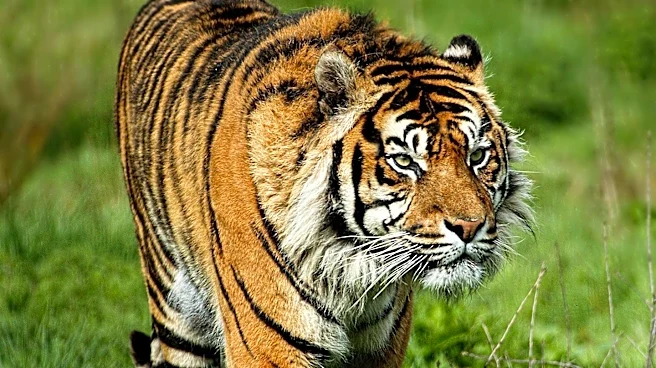
Kazakhstan has successfully reintroduced Amur tigers into the wild after a 70-year absence, marking a significant milestone in conservation efforts. The reintroduction follows extensive habitat preparation and prey population restoration. The last Caspian
tiger in Kazakhstan was documented in 1948, and the species went extinct due to habitat destruction and hunting. The current initiative, supported by the World Wildlife Fund and the United Nations Development Programme, aims to restore the tiger population in its historic Central Asian range. The program involves releasing tigers transferred from Russia and captive breeding pairs from the Netherlands. The reintroduction is part of a broader effort to restore the ecosystem and prevent human-tiger conflicts through a comprehensive conflict-prevention system.
Why It's Important?
The reintroduction of tigers in Kazakhstan is a crucial step in global conservation efforts, aiming to restore an apex predator to its natural habitat. This initiative not only seeks to increase the tiger population but also to revive the ecosystem that has been without its top predator for decades. The project highlights the importance of international cooperation in conservation, involving multiple countries and organizations. It also addresses human-wildlife conflict by implementing measures to ensure coexistence between tigers and local communities. The success of this program could serve as a model for similar conservation efforts worldwide, emphasizing the need for habitat restoration and sustainable wildlife management.
What's Next?
The next steps involve monitoring the released tigers to ensure their adaptation to the wild and their ability to hunt live prey. The program will continue to focus on habitat management, prey population restoration, and conflict prevention. The long-term success of the initiative will depend on the continued collaboration between Kazakhstan, international conservation organizations, and local communities. The project will be closely watched to assess its impact on the ecosystem and its potential to serve as a blueprint for other regions seeking to reintroduce extinct species.