




What's Happening?
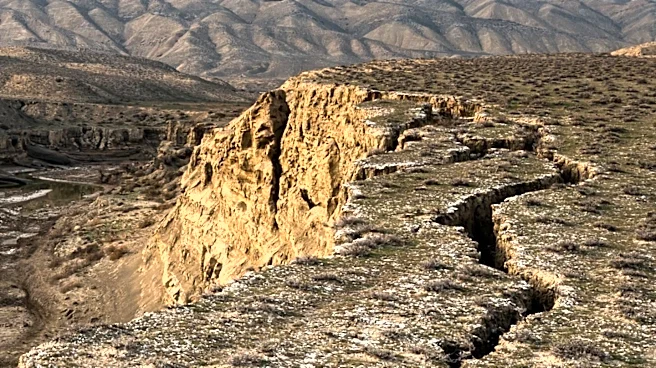
A new study has raised concerns about the potential for a major earthquake, known as 'The Big One,' along the San Andreas Fault in California. The research suggests that the risk of such an event occurring may be greater than previously believed, with
stress levels along parts of the fault system higher than understood. The study highlights the potential for widespread damage across Southern California, with simulations projecting significant casualties and economic losses. Seismologists emphasize the unpredictability of earthquakes, urging residents to prepare by retrofitting homes and maintaining emergency supplies.
Why It's Important?
The findings of this study are crucial for public safety and urban planning in California, a state that is highly vulnerable to seismic activity. The potential for a major earthquake poses significant risks to infrastructure, economy, and public health. Understanding these risks can help in developing more effective preparedness strategies and policies to mitigate damage. The study also serves as a reminder of the importance of ongoing research and investment in earthquake resilience, as well as the need for public awareness and readiness to respond to such natural disasters.
What's Next?
In response to the study, there may be increased efforts to enhance earthquake preparedness and infrastructure resilience in California. This could involve updating building codes, improving emergency response plans, and investing in public education campaigns. Policymakers and community leaders might also advocate for more funding and resources to support these initiatives. Additionally, the study could prompt further research into seismic activity and risk assessment, contributing to a better understanding of earthquake dynamics and potential impacts.