
What's Happening?
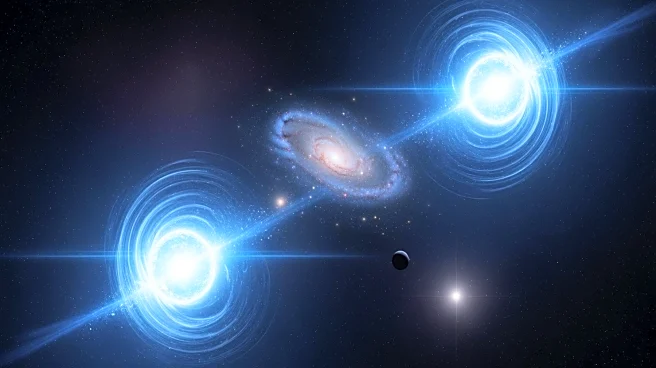
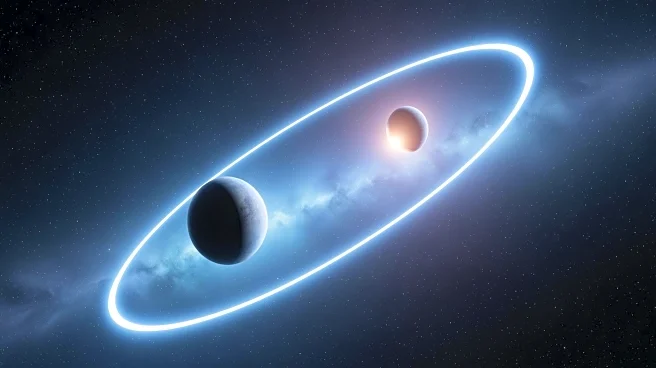
NASA astronomers have identified a neutron star collision in an unexpected location, deep within a small, faint galaxy approximately 4.7 billion light-years away. This event, led by Simone Dichiara from Penn State University, was detected within a massive
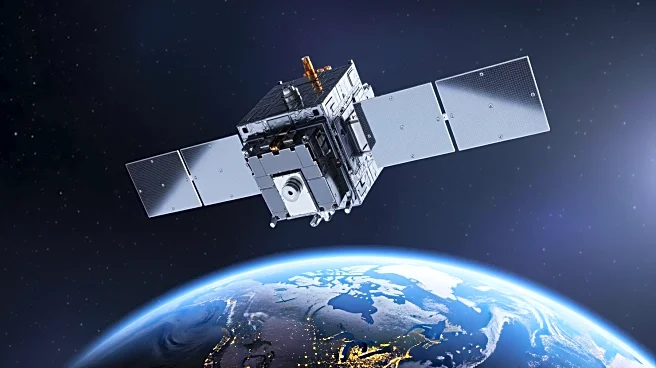
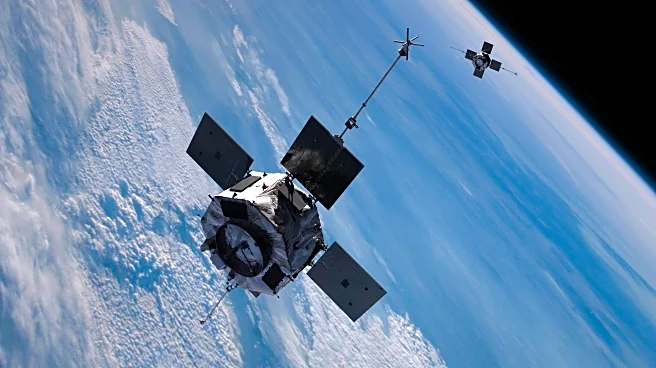
gas stream stretching 600,000 light-years across, formed by the collision of several galaxies hundreds of millions of years ago. The discovery challenges previous assumptions that such extreme cosmic events occur primarily in moderate to large-sized galaxies. The collision was detected by NASA's Fermi Gamma-ray Space Telescope, with further observations by the Chandra X-ray Observatory, Swift, and Hubble Space Telescope pinpointing the exact location. This finding could help solve mysteries related to gamma-ray bursts (GRBs), which are high-energy explosions thought to result from neutron star collisions. Some GRBs appear without a visible host galaxy, possibly due to the host being too small and faint for detection by optical telescopes.
Why It's Important?
This discovery is significant as it challenges existing theories about the environments where neutron star collisions occur, suggesting that such events can happen in smaller, less detectable galaxies. This has implications for understanding the origins of gamma-ray bursts, which are among the most energetic events in the universe. The findings could also provide insights into the production of heavy elements like gold and platinum, which are formed during these collisions. By expanding the known locations of such events, astronomers can better understand the distribution of these elements across the universe. Additionally, the discovery underscores the importance of collaborative efforts using multiple telescopes to uncover cosmic phenomena, highlighting the potential for future discoveries in similarly unexpected locations.
What's Next?
The study's findings, soon to be published in The Astrophysical Journal Letters, suggest that future observations may reveal more neutron star collisions in small, faint galaxies. This could lead to a reevaluation of the frequency and distribution of such events in the universe. Astronomers may focus on using advanced telescopes to detect similar occurrences, potentially uncovering more about the processes that lead to gamma-ray bursts and the formation of heavy elements. The continued collaboration between NASA's telescopes will be crucial in these efforts, as they provide the necessary sensitivity and precision to detect and analyze these distant cosmic events.
Beyond the Headlines
The discovery raises questions about the role of galaxy mergers in triggering star formation and subsequent neutron star collisions. The violent merger that led to this event suggests that such cosmic interactions could be more influential in shaping the universe than previously thought. This could lead to a deeper understanding of the lifecycle of galaxies and the conditions that foster extreme astrophysical phenomena. Additionally, the presence of heavy elements in distant stars, potentially originating from such collisions, may offer clues about the chemical evolution of the universe and the formation of planetary systems.