



What's Happening?
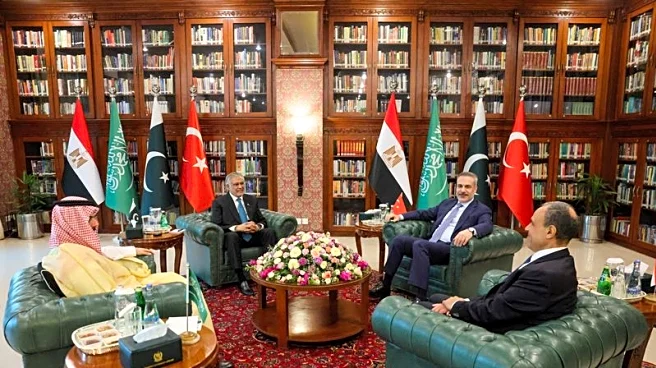
Pakistan is preparing to host talks aimed at resolving the ongoing conflict involving Iran, despite accusations from Tehran that the U.S. is planning a land assault while simultaneously seeking negotiations. Pakistan's Foreign Minister Ishaq Dar announced
the country's readiness to facilitate discussions between the involved parties, although it remains unclear if the U.S. and Iran will participate. The conflict has led to significant regional instability, with Iran's blockade of the Strait of Hormuz affecting global oil and gas shipments. The U.S. has deployed Marines to the Middle East, and Israel continues military operations against Iran, further complicating the situation.
Why It's Important?
The conflict in Iran has significant implications for global energy markets and regional stability. The blockade of the Strait of Hormuz, a critical passage for oil and gas shipments, has disrupted global supply chains, leading to economic repercussions worldwide. The involvement of major powers like the U.S. and Israel, along with regional players such as Saudi Arabia and Turkey, underscores the geopolitical complexity of the situation. The potential for escalation poses risks to international security and economic stability, with the U.S. facing domestic political pressure over its involvement.
What's Next?
The outcome of the proposed talks in Pakistan could influence the trajectory of the conflict. If successful, they may lead to a de-escalation and reopening of the Strait of Hormuz, alleviating some economic pressures. However, the entrenched positions of the U.S., Israel, and Iran present significant challenges to reaching a comprehensive settlement. The international community will be closely monitoring the situation, as any resolution could have far-reaching effects on global energy markets and regional alliances.