





What's Happening?
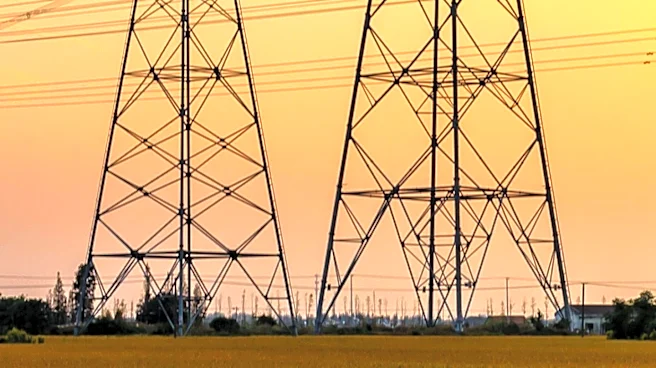
Congressman Bryan Steil (WI-01) and U.S. Department of Energy Secretary Chris Wright announced a $5.1 billion loan package for Alliant Energy. This significant investment aims to lower electricity costs, expand firm power generation, and strengthen grid
reliability in Wisconsin and Iowa. The projects funded by this package are expected to add over 2.6 gigawatts (GW) of new or upgraded power generation capacity and deliver more than $1 billion in electricity cost savings for American families. The investments will support new natural gas-fired power plants, energy storage systems, and upgrades to existing generation facilities, creating hundreds of construction-related jobs.
Why It's Important?
This $5.1 billion loan package is crucial for enhancing energy infrastructure and affordability in the Midwest. For Wisconsin families and businesses, the promise of nearly $1 billion in electricity cost savings directly impacts household budgets and operational expenses. The expansion of power generation capacity and improved grid reliability are vital for supporting economic growth, particularly in energy-intensive manufacturing sectors like those in the Beloit region. By strengthening the grid and increasing energy supply, the investment aims to attract more businesses and create jobs, fostering a more competitive economic environment. This initiative aligns with broader national goals of energy independence and modernizing critical infrastructure.
What's Next?
The announced loan package will initiate a series of projects designed to upgrade and expand Alliant Energy's power generation and distribution capabilities across Wisconsin and Iowa. These projects, including new natural gas plants and energy storage systems, are expected to be implemented over the coming years, leading to the creation of hundreds of construction jobs. The Department of Energy and Congressman Steil will likely monitor the progress and impact of these investments on electricity costs and grid reliability. The success of these initiatives could serve as a model for similar energy infrastructure projects in other regions, potentially influencing future federal funding and policy decisions related to energy development and cost reduction.
Beyond the Headlines
This substantial investment in traditional and modern energy infrastructure highlights a strategic approach to energy policy that balances immediate economic needs with long-term reliability. While the package includes natural gas-fired plants, it also emphasizes energy storage, indicating a hybrid strategy that acknowledges the role of both conventional and evolving energy technologies. The focus on lowering electricity costs and strengthening grid reliability speaks to fundamental concerns for both consumers and industries. This move could also be seen as an effort to ensure energy security and resilience, particularly in the face of increasing demand and potential disruptions. It underscores the complex interplay between federal policy, regional economic development, and the evolving energy landscape.