





What's Happening?
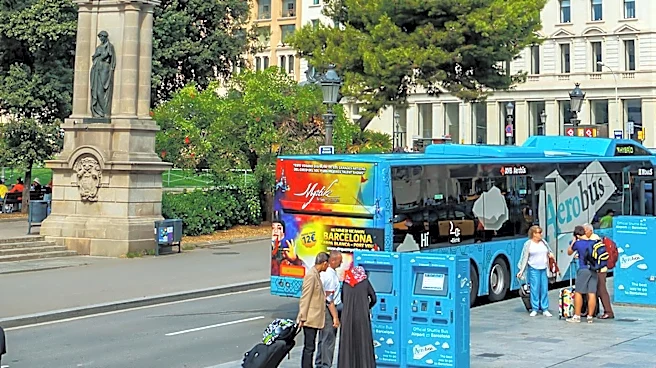
Barcelona is facing significant challenges due to overtourism, leading to protests from residents and the implementation of new city policies. In July 2024, demonstrators protested against tourists, a movement that continued into 2025. By early 2026,
the city had nearly doubled its hotel guest tax in response to these concerns. Further, the mayor has announced a ban on over 10,000 tourist apartment rentals, which is set to be fully implemented by 2028. These measures come as tourism continues to be a major economic driver for Barcelona, accounting for 14% of its economy and providing 150,000 jobs. The protests highlight a growing sentiment among locals that the current economic model, heavily reliant on tourism, is contributing to a housing crunch and other quality-of-life issues for residents. The city's efforts to manage tourism are part of a broader trend seen in other popular European destinations.
Why It's Important?
The situation in Barcelona is important as it exemplifies a growing global tension between the economic benefits of tourism and the quality of life for local residents. The city's actions, such as increasing tourist taxes and banning short-term rentals, could serve as a model or a cautionary tale for other major tourist destinations grappling with similar issues. For the U.S. tourism industry, this could signal future challenges in popular cities if unchecked growth leads to similar local backlashes. It also highlights the evolving role of urban planning and policy-making in balancing economic prosperity with social sustainability. The housing crunch, a central theme in the protests, is a critical issue that many global cities face, and Barcelona's approach to limiting tourist accommodations directly addresses this concern, potentially influencing urban development strategies elsewhere. The outcome of Barcelona's policies will be closely watched by stakeholders in the hospitality, real estate, and urban planning sectors worldwide.
What's Next?
In the immediate future, Barcelona will proceed with the phased ban on 10,000 tourist apartment rentals, with full implementation expected by 2028. This will likely lead to a significant reduction in available short-term accommodations and could impact the city's tourism landscape. The increased hotel guest tax will continue to generate additional revenue for the city, which may be allocated to infrastructure improvements or initiatives aimed at mitigating the negative impacts of tourism. It is also probable that resident protests will continue, particularly if the housing crisis persists or if the new regulations are perceived as insufficient. The tourism industry, including hotel operators and tour companies, will need to adapt to these new regulations, potentially shifting their business models or marketing strategies. Other cities facing overtourism may observe Barcelona's progress and consider adopting similar measures, leading to a broader trend of stricter tourism management policies across popular destinations.
Beyond the Headlines
Beyond the immediate policy changes, Barcelona's struggle with overtourism points to deeper societal and economic shifts. The protests reflect a growing global awareness of the environmental and social costs of mass tourism, prompting a re-evaluation of sustainable tourism models. This situation also highlights the tension between globalized economies, which often prioritize tourism revenue, and local communities striving to preserve their cultural identity and living standards. The debate over who benefits most from tourism—local residents, international corporations, or property owners—is central to this conflict. Furthermore, the ban on tourist rentals raises questions about property rights, the role of technology in facilitating short-term rentals, and the effectiveness of government intervention in housing markets. This could lead to legal challenges and further public discourse on the balance between individual economic freedom and collective community well-being, potentially influencing urban policy debates far beyond Barcelona.