



What's Happening?
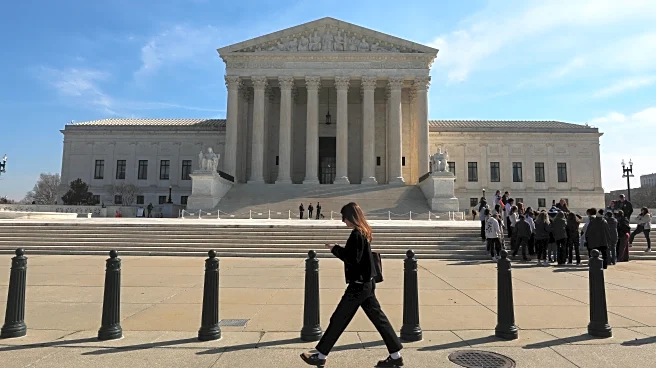
The U.S. Supreme Court is set to hear arguments in a case involving Terry Pitchford, a Black death row inmate from Mississippi, who claims racial discrimination in jury selection. The case revisits issues previously highlighted in the 2019 Supreme Court decision
that overturned the conviction of Curtis Flowers due to racial bias in jury selection by the same prosecutor, Doug Evans. In Pitchford's trial, Evans dismissed all but one Black juror, a decision upheld by the state Supreme Court. The case has been ongoing for 20 years, with a U.S. District Judge previously overturning Pitchford's conviction, citing insufficient opportunity for his lawyers to argue against the jury dismissals. The 5th U.S. Circuit Court of Appeals later reversed this decision. The Supreme Court's review will focus on whether Pitchford's legal team adequately objected to the jury selection process and if the state Supreme Court's ruling was reasonable.
Why It's Important?
This case is significant as it addresses the broader issue of racial discrimination in the U.S. judicial system, particularly in capital cases. The outcome could impact how jury selection is conducted in future trials, potentially leading to stricter scrutiny of racial bias claims. A decision in favor of Pitchford might set a precedent for overturning convictions where racial bias is evident, affecting numerous cases across the country. It also highlights ongoing concerns about racial equity in the legal process, which could influence public policy and reform efforts aimed at ensuring fair trials for all defendants, regardless of race.
What's Next?
If the Supreme Court rules in favor of Pitchford, he could be released or retried, depending on the court's directives. The case may return to the Mississippi Supreme Court for further review of the jury selection process. This decision could prompt legislative or judicial reforms to address racial bias in jury selection, potentially leading to new guidelines or training for prosecutors and judges. Stakeholders, including civil rights organizations and legal advocacy groups, are likely to monitor the case closely, as its outcome could influence future legal strategies and advocacy efforts.