








What's Happening?
Langkawi, an archipelago of 99 islands off Malaysia's northwestern coast, is distinguished by its ancient rainforests, turquoise waters, and unique cultural identity. It holds UNESCO Global Geopark status, acknowledging its extraordinary geological landscape,
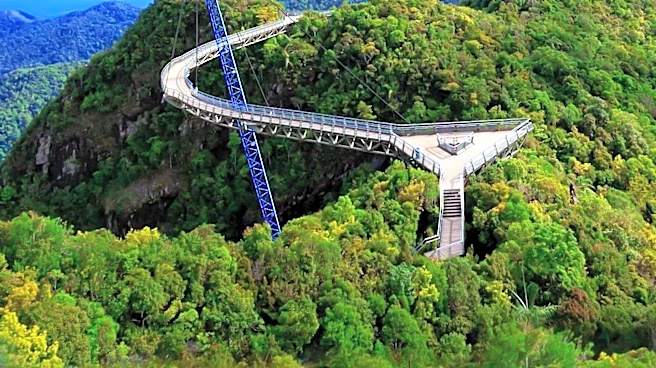
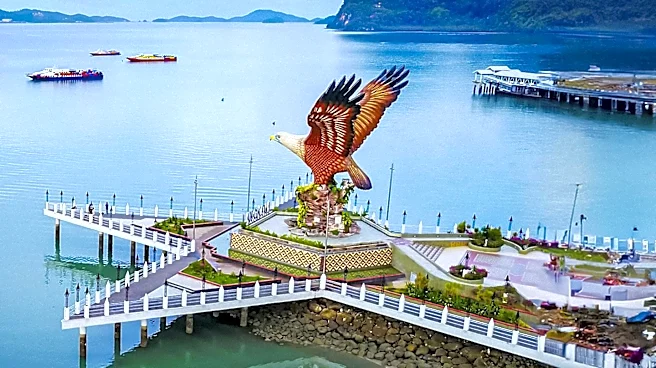
which includes dramatic limestone karsts, ancient mangroves, and fossil-rich rock faces that document 500 million years of Earth's evolution. The island's rich folklore features legends of giants, curses, and mythical eagles, with a towering eagle statue at Kuah Jetty symbolizing this heritage. Key attractions include the SkyBridge, a curved pedestrian bridge suspended 700 meters above sea level, accessible via the SkyGlide and cable car. Additionally, Langkawi is a duty-free shopping destination, offering reduced prices on various goods from chocolates and cosmetics to alcohol and electronics.
Why It's Important?
Langkawi's UNESCO Global Geopark status highlights the importance of preserving unique natural environments and geological heritage globally. This recognition not only promotes ecological conservation but also attracts international tourism, contributing to the local economy through increased visitor numbers. The blend of natural beauty and rich cultural folklore provides a distinctive travel experience, differentiating Langkawi from other destinations. Its duty-free status further enhances its appeal, drawing shoppers and boosting commercial activity. For the U.S. tourism market, Langkawi offers an exotic and culturally rich destination, potentially influencing travel trends and investment in eco-tourism and cultural exchange programs. The island's success in integrating conservation with tourism can serve as a model for other regions seeking sustainable development.
What's Next?
Langkawi is expected to continue leveraging its UNESCO Global Geopark status to attract more international tourists, including those from the U.S. Efforts will likely focus on promoting its unique geological formations, ancient rainforests, and cultural heritage through various tourism campaigns. The island's duty-free shopping will remain a significant draw, potentially leading to further expansion of retail offerings. Resorts like Rebak Island Resort & Marina Langkawi are likely to continue offering experiences and excursions that allow visitors to engage with the landscape. The Langkawi Tourism Academy@Kolej Komuniti Langkawi will continue to play a role in developing skilled professionals for the tourism and hospitality sectors, ensuring the sustained growth and quality of services on the island.
Beyond the Headlines
Beyond its immediate appeal as a tourist destination, Langkawi's UNESCO Global Geopark status underscores a broader global commitment to recognizing and protecting sites of significant geological and ecological value. This designation implies a responsibility to manage tourism sustainably, balancing economic benefits with environmental preservation. The island's rich folklore and cultural identity, intertwined with its natural landscape, offer a unique case study in how cultural narratives can enhance the appreciation of natural heritage. The success of Langkawi in attracting diverse visitors, including those from the U.S., highlights the growing demand for experiential travel that combines adventure, relaxation, and cultural immersion. This trend could influence how other regions develop their tourism strategies, emphasizing authenticity and sustainability.