



What's Happening?
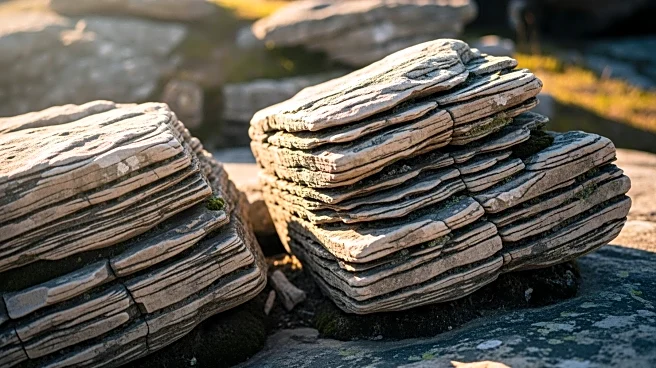
Scientists have identified rocks in Canada's Nuvvuagittuq Greenstone Belt that may be among the oldest on Earth, potentially dating back over 4 billion years. This discovery, if confirmed, could provide a unique glimpse into the planet's primordial crust
and early geological processes. The research, led by Jonathan O'Neil from the University of Ottawa, utilized isotopic dating techniques involving neodymium and samarium to estimate the age of these rocks. The findings suggest that these rocks could offer valuable insights into the formation of Earth's early atmosphere, oceans, and geological features. However, the dating of such ancient rocks remains contentious, with ongoing debates among geologists about the accuracy of these age estimates.
Why It's Important?
Understanding the age and formation of these ancient rocks is crucial for reconstructing Earth's early history and the processes that shaped its surface. Insights gained from studying these rocks could inform theories about the planet's early atmosphere and the origins of its oceans, which are key to understanding the conditions that eventually led to the emergence of life. The research also highlights the challenges and uncertainties involved in dating ancient geological formations, emphasizing the need for continued scientific investigation and debate. This discovery has the potential to advance our knowledge of Earth's early environment and contribute to broader geological and planetary science research.
What's Next?
Further research and analysis are needed to confirm the age of the Nuvvuagittuq Greenstone Belt rocks and to resolve the ongoing debates among geologists. This will likely involve the use of advanced dating techniques and collaboration among international research teams. The findings could lead to new hypotheses about Earth's early geological history and influence future studies on the planet's formation and evolution. As scientists continue to explore these ancient rocks, they may uncover additional evidence that could reshape our understanding of Earth's early environment and the processes that have shaped its geological features over billions of years.