
What's Happening?
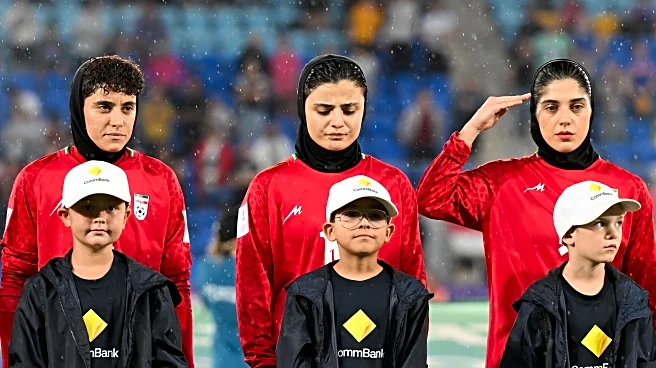
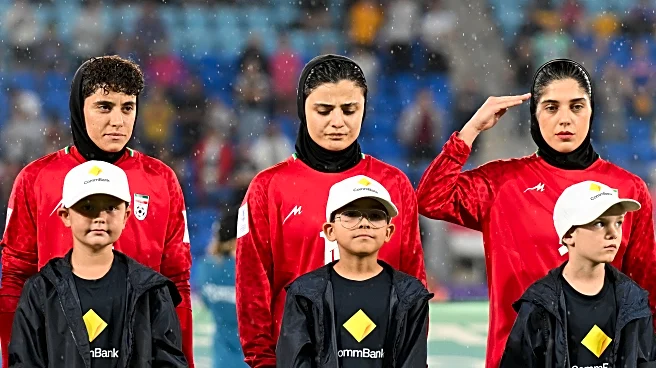
Members of the Iranian women's soccer team are facing potential persecution after refusing to sing their national anthem during a match in Australia. The team, participating in the Women's Asian Cup, was branded as 'wartime traitors' by Iranian state
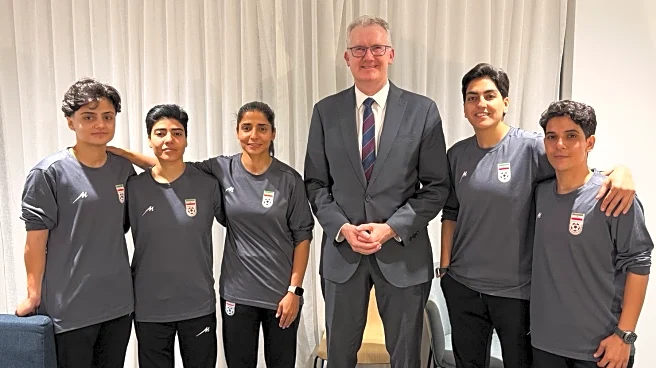
media. Following their elimination from the tournament, at least one player was seen signaling for help, and several players have sought asylum to avoid returning to Iran. President Trump has urged the Australian government to offer asylum to the players, warning of possible severe consequences if they return home. The situation has drawn international attention, with human rights groups expressing concern for the players' safety.
Why It's Important?
This incident highlights the intersection of sports and political expression, particularly in regimes with strict nationalistic expectations. The players' actions and subsequent branding as traitors underscore the risks athletes face when using their platform for protest. The international response, including President Trump's call for asylum, reflects the broader geopolitical tensions and human rights considerations. The situation could impact diplomatic relations and influence how other athletes approach political expression in international competitions.
What's Next?
The immediate focus is on the safety and asylum status of the players who have fled. The Australian government, along with international sports bodies, may face pressure to ensure the players' protection. The incident could lead to increased scrutiny of Iran's treatment of athletes and potentially influence future international sporting events involving Iranian teams. The global sports community may also see heightened discussions on the role of athletes in political protests.