

What's Happening?
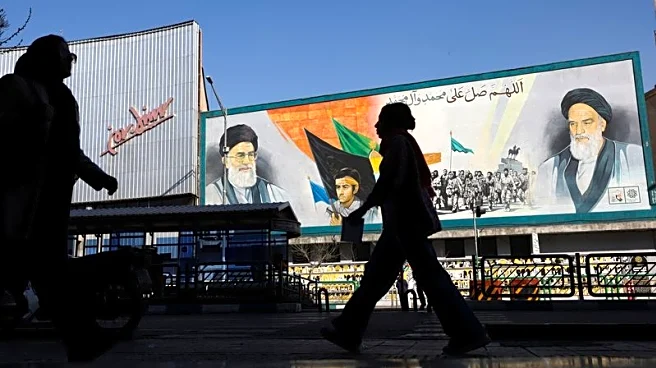
President Trump has indicated a shift in his approach towards Iran, expressing readiness to restart negotiations with the Iranian regime. This comes after he had previously encouraged the Iranian people to rise up against their government. In a recent
video, Trump urged Iranians to seize the opportunity to overthrow the regime, suggesting that the U.S. was paving the way for such a movement. However, he has now stated a willingness to engage in talks with the same regime, which has recently appointed a new interim Supreme Leader. Trump's stance appears to be noncommittal regarding the continuation of U.S. support for a potential uprising, stating that he would assess the situation as it unfolds.
Why It's Important?
This development is significant as it highlights a potential shift in U.S. foreign policy towards Iran under President Trump. The willingness to negotiate with the Iranian regime could impact U.S.-Iran relations and influence regional stability in the Middle East. For the Iranian people, this change in stance may affect their expectations of U.S. support in their efforts for political change. The broader implications could include shifts in international alliances and the strategic balance in the region, as well as potential impacts on global oil markets and security dynamics.
What's Next?
The next steps could involve diplomatic engagements between the U.S. and Iran, potentially leading to renewed discussions on nuclear agreements or other bilateral issues. The international community, including allies and adversaries, will likely monitor these developments closely. Reactions from Iranian political leaders and civil society groups will be crucial in determining the future of U.S.-Iran relations. Additionally, the response from other regional powers and global stakeholders could shape the geopolitical landscape.