







What's Happening?
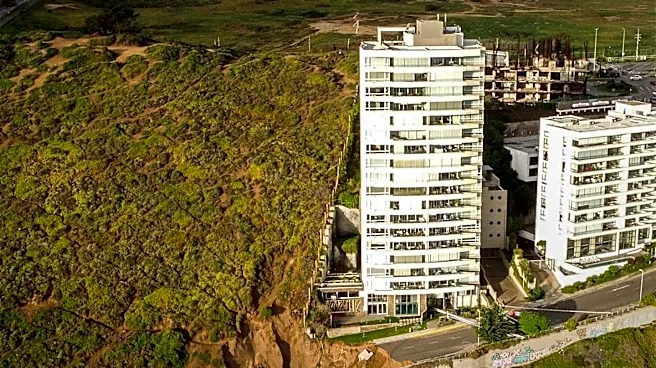
Several residents in Orlando's Villas of Costa Del Sol neighborhood have been displaced after a significant sinkhole opened beneath the rear of a townhome. The sinkhole's appearance led the city to condemn two homes, effectively barring residents from
returning to their properties. This incident highlights the geological vulnerabilities that can affect residential areas, particularly in regions prone to such natural occurrences. The immediate consequence is the loss of habitation for those affected, necessitating urgent relocation and assessment of structural integrity for surrounding properties. The event underscores the unpredictable nature of sinkholes and their potential to cause sudden and severe disruption to homeowners.
Why It's Important?
This event is important due to its direct impact on housing stability and property values in the affected Orlando neighborhood. Sinkholes, while a known geological phenomenon in Florida, pose a significant risk to infrastructure and personal safety. The condemnation of homes not only results in immediate displacement for residents but also raises concerns about the long-term habitability and safety of adjacent properties. For the broader community, such incidents can lead to increased insurance premiums, stricter building codes, and a potential decrease in property desirability in areas perceived to be at higher risk. It also prompts local authorities to review and potentially enhance geological surveys and urban planning strategies to mitigate future risks, affecting municipal budgets and development policies.
What's Next?
Following the condemnation, city officials will likely conduct further geological assessments to determine the full extent of the sinkhole and its potential impact on neighboring structures. Residents of the condemned homes will need to secure alternative housing and begin the process of dealing with insurance claims and potential property loss. There may be discussions within the community and with local government regarding preventative measures, such as enhanced geological monitoring or revised construction standards in sinkhole-prone areas. The incident could also trigger a broader public awareness campaign about sinkhole risks and preparedness in Florida, potentially influencing real estate markets and homeowner decisions in the region.
Beyond the Headlines
Beyond the immediate displacement and property damage, this sinkhole incident touches upon deeper issues of urban resilience and environmental risk management in Florida. The state's unique karst topography makes it particularly susceptible to sinkholes, a factor that often goes unaddressed in rapid urban development. This event could reignite debates about the balance between development and geological stability, potentially leading to more stringent environmental impact assessments for new construction projects. Furthermore, it highlights the psychological toll on residents who face sudden and unpredictable loss of their homes, raising questions about community support systems and long-term recovery efforts in the face of natural disasters. The incident serves as a stark reminder of nature's power and the continuous challenge of coexisting with geological hazards.