


What's Happening?
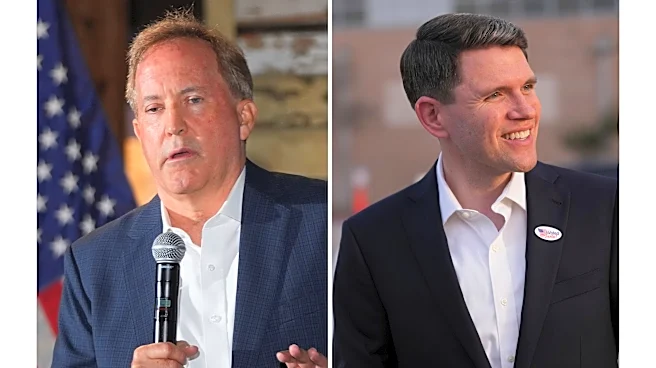
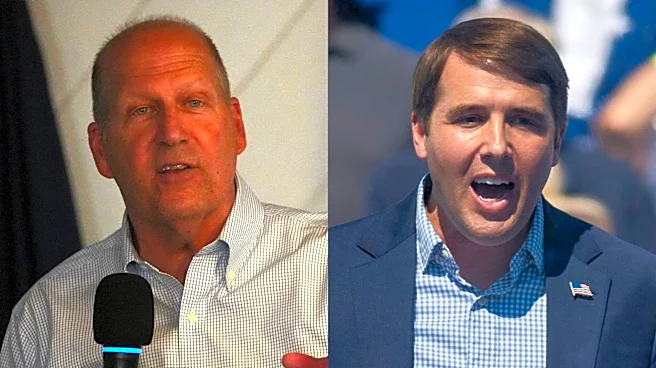
A recent Emerson College poll indicates close contests in both the Iowa governor's race and the U.S. Senate race, with approximately two months remaining until Election Day. In the gubernatorial contest, Democrat Rob Sand is shown to be leading Republican
Zach Lahn by a margin of 3 percentage points. Concurrently, the U.S. Senate race shows Republican Ashley Hinson ahead of Democrat Josh Turek by 5 percentage points. These poll results suggest that both races are highly competitive and could go either way, reflecting a divided electorate in Iowa as the election approaches. The findings highlight the importance of continued campaigning and voter engagement for all candidates involved.
Why It's Important?
The close margins revealed by the Emerson College poll underscore the highly competitive political landscape in Iowa for the upcoming elections. For the governor's race, a 3-point lead for Rob Sand suggests that the incumbent party faces a significant challenge, and the outcome could shift the state's executive leadership. Similarly, Ashley Hinson's 5-point lead in the U.S. Senate race indicates a tight contest that will be crucial for both national parties, as the balance of power in the Senate could be influenced by such outcomes. These polls are vital for campaigns to assess their strategies, allocate resources, and tailor their messaging to undecided voters. For the public, these numbers provide an early indication of potential electoral shifts and the prevailing political sentiments within the state, influencing voter engagement and media coverage.
What's Next?
With two months until Election Day, candidates in both the gubernatorial and U.S. Senate races are expected to intensify their campaign efforts. This will likely include increased advertising, more public appearances, and focused outreach to key demographics and undecided voters. The close poll numbers suggest that both parties will invest heavily in Iowa, recognizing the state's pivotal role in national political dynamics. Future polls will be closely watched to track any shifts in voter sentiment. The campaigns will also likely focus on get-out-the-vote initiatives as the election draws nearer, aiming to convert their support into actual votes. The outcomes of these races will have significant implications for Iowa's state governance and its representation in the U.S. Congress.
Beyond the Headlines
The tight polling numbers in Iowa reflect a broader national trend of political polarization and closely contested elections. The slight leads for both Democratic and Republican candidates in different races within the same state highlight the nuanced and often unpredictable nature of modern electoral politics. This situation also underscores the critical role of swing states like Iowa in determining national political trajectories. The campaigns will not only be about individual candidates but also about the broader ideological battles and policy debates at both state and federal levels. The results will offer insights into voter priorities, the effectiveness of different campaign strategies, and the overall political mood of the country, extending beyond the immediate impact on Iowa's political landscape.