







What's Happening?
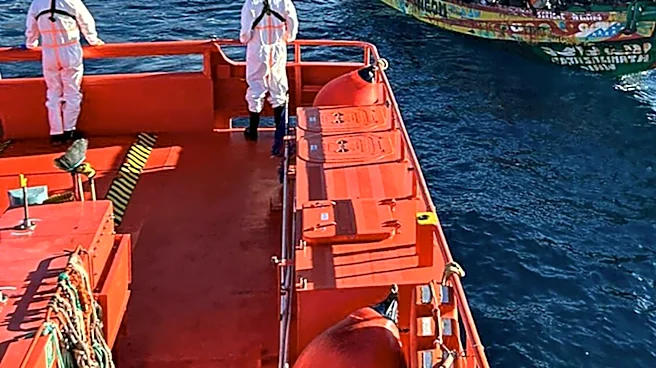
The Spanish Government, through a resolution from the Ministry of Transport, has taken control of the port of Ceuta to establish temporary facilities for approximately 1,000 migrants. This decision follows the Ceuta Executive's refusal to cede the requested
16,000 square meters of port service area. The State Secretariat for Migrations had initially requested the space until December 2026 for humanitarian aid purposes, including the installation of tents, medical facilities, and social intervention areas. The local Port Authority's Administrative Council rejected this request, citing incompatibility with normal port operations. However, the Ministry of Transport invoked Article 73.3 of the State Ports and Merchant Marine Law, citing 'exceptional circumstances' and 'reasons of general interest linked to national security' to authorize the temporary use of the area. The Ceuta government, led by Juan Jesús Vivas, has criticized this move as a 'grave error,' arguing that the port is a critical infrastructure and that the priority should be the return of migrants to Morocco.
Why It's Important?
This action highlights a significant tension between central and regional authorities in Spain regarding migration policy and resource allocation. The Spanish Government's invocation of national security interests to override local objections underscores the perceived urgency and scale of the migration situation in Ceuta. For the U.S., this situation mirrors broader international challenges in managing migrant flows and the political complexities that arise when national governments intervene in local governance for humanitarian or security reasons. It also demonstrates how migration can become a point of contention, impacting infrastructure use and inter-governmental relations. The dispute could set a precedent for how central governments address similar crises, potentially influencing international discussions on sovereignty, humanitarian aid, and border management. The Ceuta government's emphasis on the return of migrants also reflects a common debate in many countries, including the U.S., about the balance between humanitarian assistance and border enforcement.
What's Next?
The Spanish Government will proceed with the installation of temporary facilities, including tents and medical services, within the designated 16,000 square meters of the Ceuta port to accommodate the 1,000 migrants. This setup is planned to remain until at least December 2026, with a possibility of extension. The Ceuta government is expected to continue its vocal opposition, potentially seeking further avenues to challenge the central government's decision or to advocate for a different approach to migrant management, specifically emphasizing repatriation. Political reactions from various parties, such as the PP, indicate that this issue will remain a point of political debate and scrutiny. The long-term implications for the port's operations and the integration of migrants into Ceuta will also be closely monitored, as will any potential shifts in Spain's broader migration policies.
Beyond the Headlines
The Spanish Government's decision to take control of the Ceuta port raises deeper questions about the balance of power between central and autonomous regional governments, particularly in times of perceived crisis. The invocation of 'national security' as a justification for overriding local authority could be seen as a significant precedent, potentially impacting future disputes over resource allocation and policy implementation. Ethically, the situation highlights the ongoing tension between humanitarian obligations to provide shelter and care for migrants and the practical challenges and local concerns associated with such provisions. Culturally, the influx of migrants and the establishment of temporary camps can lead to social integration challenges and shifts in local demographics and community dynamics. This event also underscores the broader European context of migration pressures and how individual nations grapple with these complex issues, often leading to internal political friction and debates over national identity and responsibility.