
What's Happening?
The state of New York is actively pursuing the development of thermal energy networks (TENs) to transition away from fossil fuels for heating and cooling. The New York Public Service Commission has approved
two utility thermal energy network (UTEN) plans, allocating $111.5 million for their development. These projects, located in Haverstraw and Buffalo, aim to connect various structures, including residential, commercial, and governmental buildings, and an elementary school, to systems that capture ambient temperatures from underground and waste heat from sources like sewer systems. The Haverstraw project will utilize bore fields and wastewater, while the Buffalo project will integrate boreholes and a wastewater heat recovery system with an existing steam heat system. This initiative is supported by the UpgradeNY coalition, which advocates for clean electric heating through thermal networks and heat pumps.
Why It's Important?
This move by New York is significant as it represents a concrete step towards reducing reliance on fossil fuels for heating and cooling, a sector that traditionally contributes substantially to carbon emissions. By leveraging waste heat and geothermal sources, these thermal energy networks offer a cleaner, more sustainable alternative to conventional gas-powered systems. The successful implementation of these projects could serve as a blueprint for other regions in the United States, potentially accelerating the national transition to clean energy. Furthermore, the development of these systems is expected to create new jobs in the construction sector within the region. The financial commitment of $150 million to thermal energy networks aims to ensure that the costs of this transition are not unduly shifted to consumers, making clean energy more accessible and affordable.
What's Next?
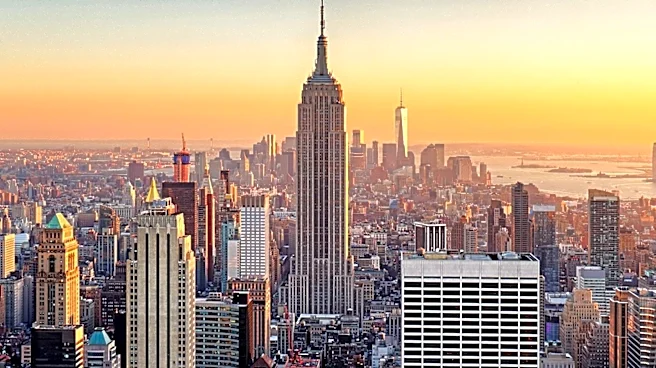
The approved UTEN projects in Haverstraw and Buffalo will proceed with development, with the New York Public Service Commission investing $50 million in the Haverstraw network. If successful, these projects could provide scalable models for other parts of the U.S. States like California, Colorado, Minnesota, and Washington are already exploring similar UTEN developments. Additionally, the Metropolitan Transportation Authority (MTA) in New York is conducting an $800,000 feasibility study to assess the potential of a UTEN to cool subway platforms in Lower Manhattan and transfer excess heat to nearby municipal buildings. This study, focusing on the Brooklyn Bridge-City Hall and Chambers Street station complex, could lead to the first UTEN project in a U.S. public transport system, further expanding the application of this technology.
Beyond the Headlines
The shift towards thermal energy networks in New York highlights a broader trend in energy policy: the recognition and utilization of waste heat as a valuable, untapped resource. Historically, district heating systems, while efficient in dense urban areas, have largely relied on fossil fuels. Modernizing these systems to incorporate renewable sources and waste heat recovery represents a fundamental change in how communities approach energy consumption and sustainability. This approach not only addresses environmental concerns by reducing greenhouse gas emissions but also enhances energy security by diversifying energy sources. The ethical implications include ensuring equitable access to these cleaner energy solutions and managing the transition in a way that minimizes economic disruption for communities currently dependent on fossil fuel industries. The long-term impact could be a more resilient and environmentally friendly urban infrastructure.