





What's Happening?
The United States is intensifying efforts to expand its energy exports to India, as the South Asian nation faces significant supply disruptions from the Middle East and reduced access to Russian oil due to sanctions. U.S. Ambassador to India, Sergio Gor,
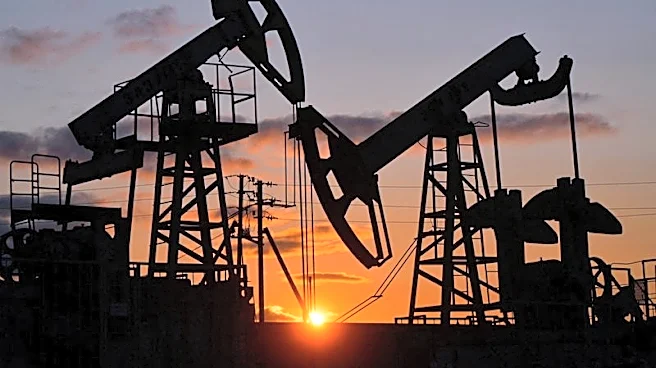
recently met with India's Minister of Petroleum and Natural Gas, Hardeep Singh Puri, to discuss enhancing India's energy security through American energy sources. The U.S. has ended waivers for Iranian and Russian crude, urging India to increase its imports of U.S. crude oil. However, India faces challenges such as high freight costs, incompatible refinery infrastructure, and longer delivery times, which complicate the shift to American energy. Despite these hurdles, the U.S. is focusing on exporting liquefied natural gas (LNG), liquefied petroleum gas (LPG), ethane, and propane to India, rather than crude oil.
Why It's Important?
This development is crucial as it highlights the geopolitical and economic challenges India faces in securing its energy needs. The U.S. push for increased energy sales to India comes at a time when global energy markets are tight, and India is grappling with an acute energy supply crunch. The shift towards American energy could help diversify India's energy sources, potentially enhancing its energy security. However, the transition may also lead to higher energy costs for India, impacting its economy, which heavily relies on energy imports. The situation underscores the complex interplay between international diplomacy, trade policies, and energy security, with significant implications for both U.S. and Indian economic and strategic interests.
What's Next?
India is expected to navigate its energy strategy carefully, balancing its immediate energy needs with long-term energy security goals. The U.S. is likely to continue its diplomatic efforts to secure energy deals with India, potentially offering more favorable terms to expedite agreements. Meanwhile, India may explore alternative energy sources and technologies to mitigate the impact of supply disruptions. The ongoing geopolitical tensions and market dynamics will play a critical role in shaping the future of U.S.-India energy trade relations.